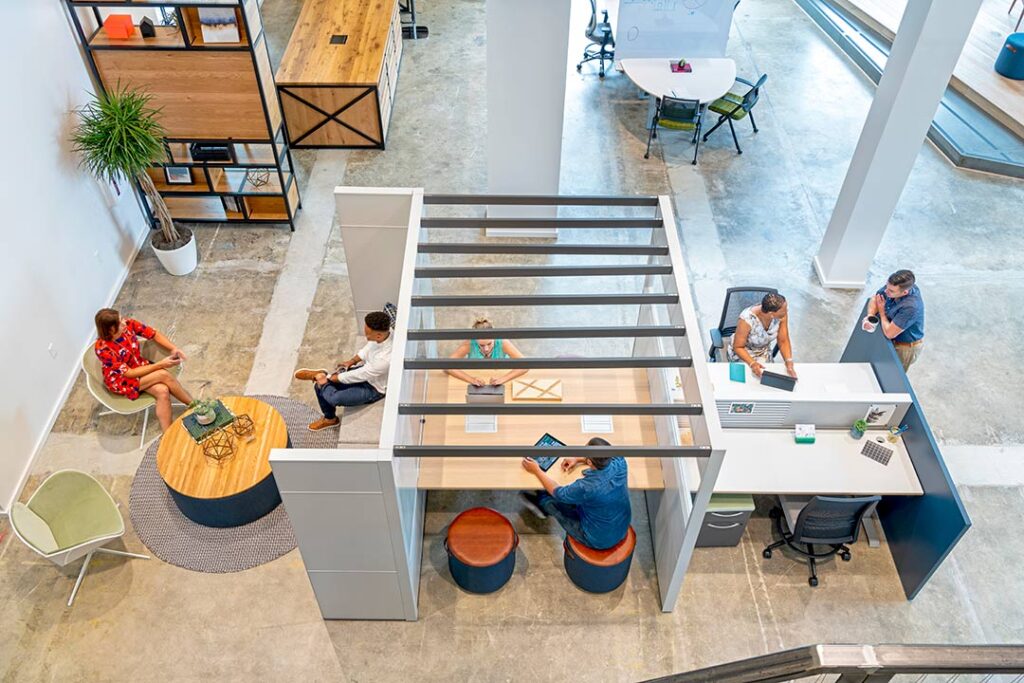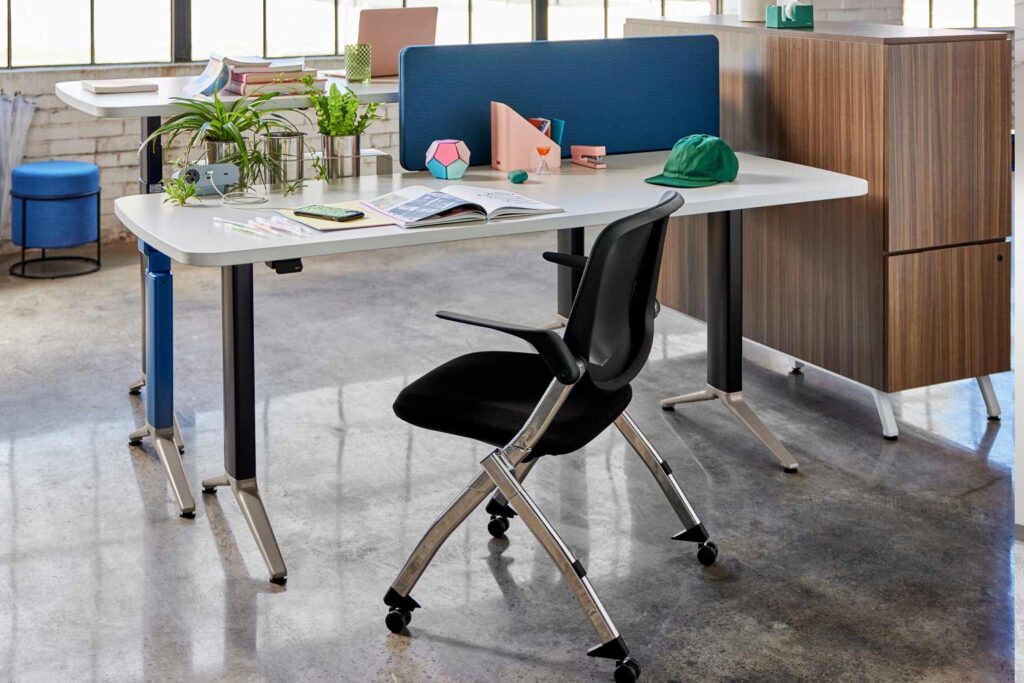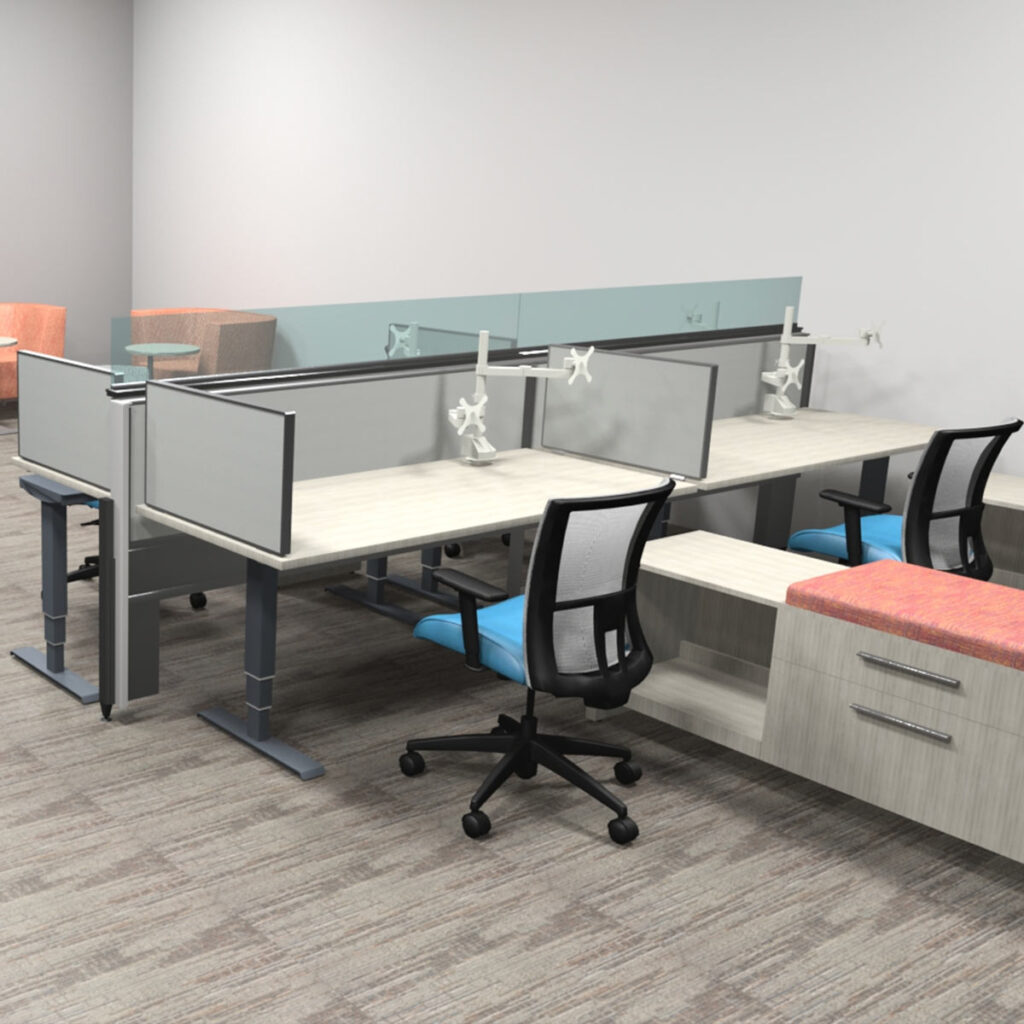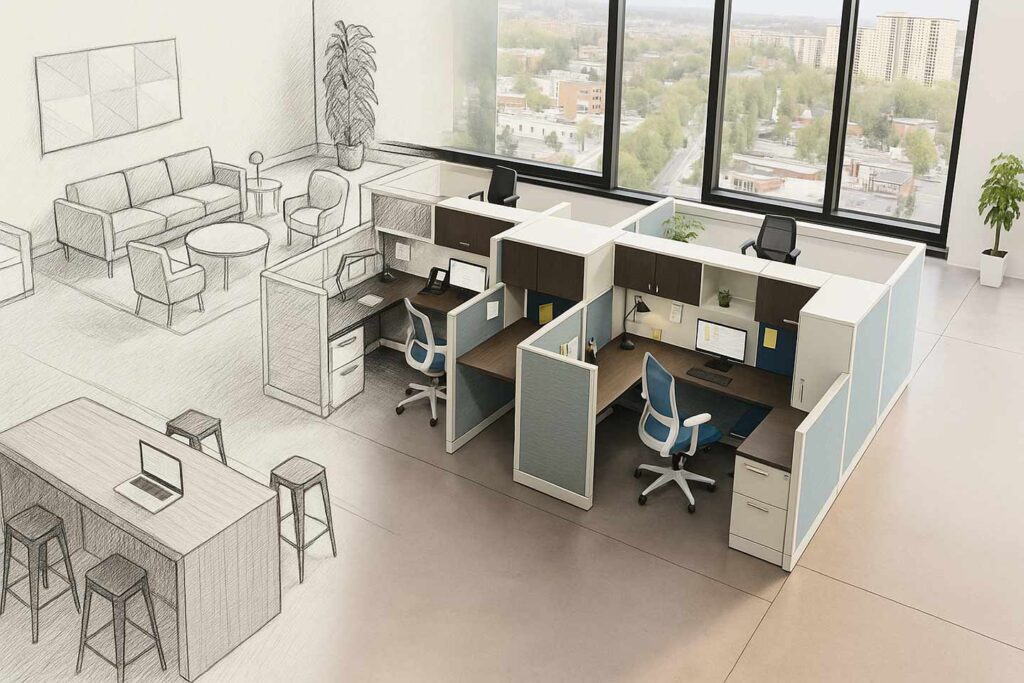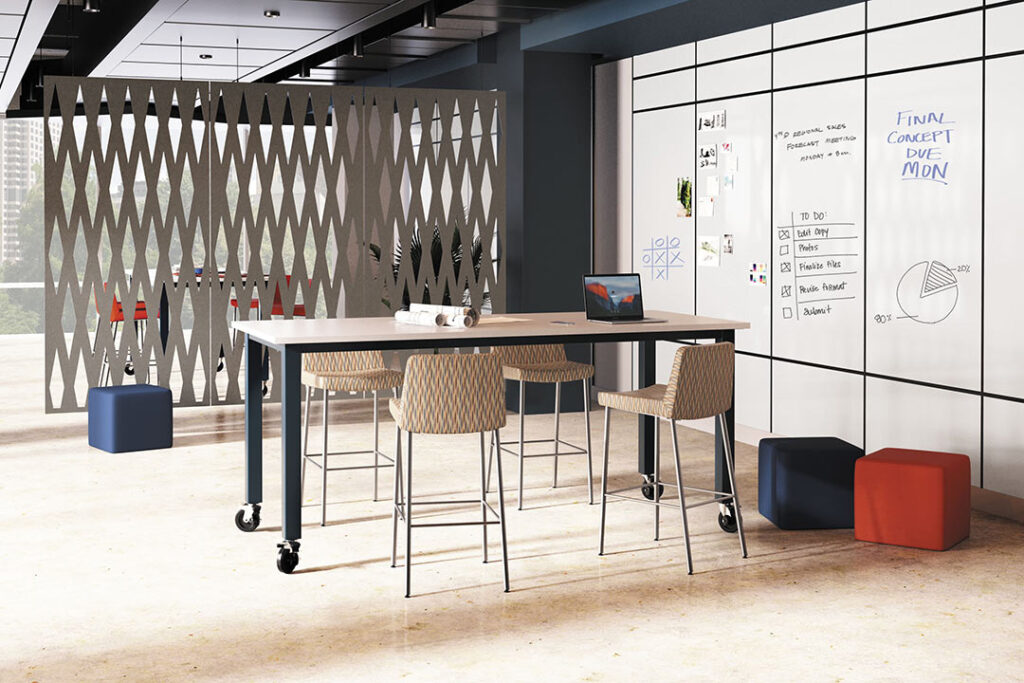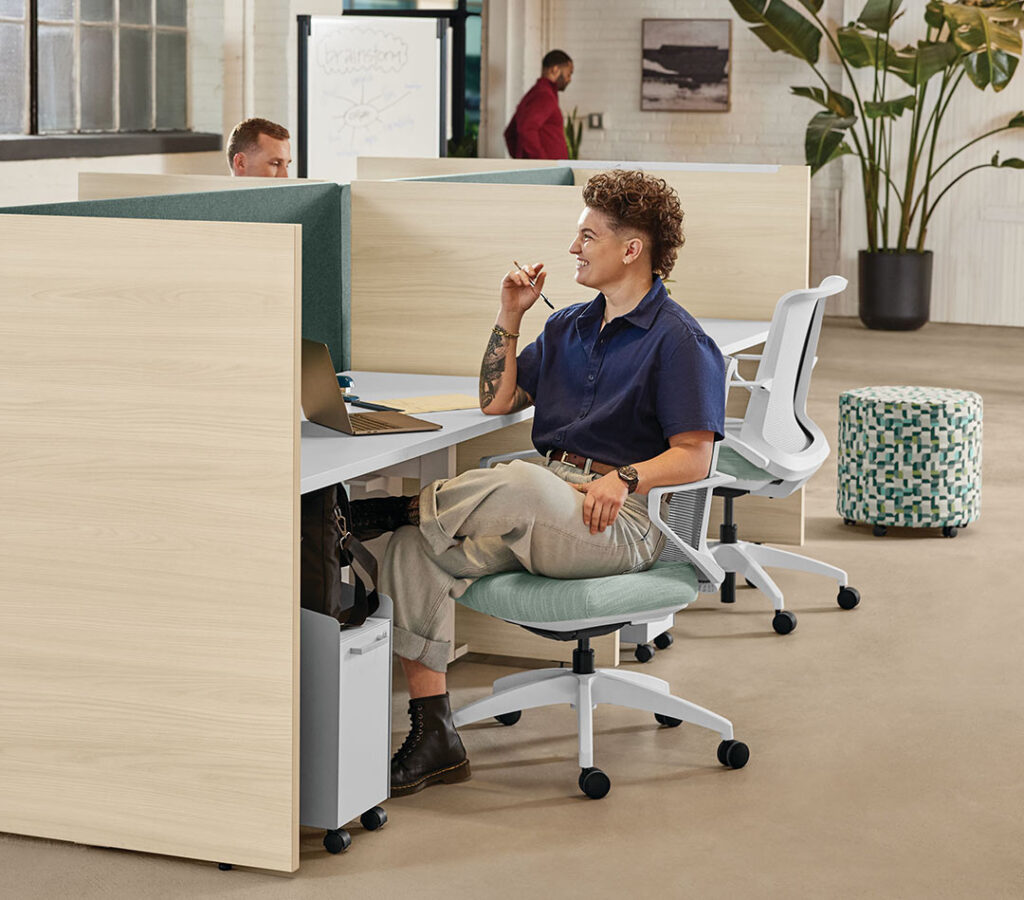
The 3 Most Common (and Costly) Office Furniture Mistakes

At Gateway, we’ve spent years as a trusted partner in office furniture procurement. We’ve seen the good, the bad, and the wobbly. While most businesses know how to avoid the obvious pitfalls, like buying furniture without a plan, some costly mistakes fly under the radar until it’s too late. 

These aren’t just minor inconveniences; they’re errors that drain your budget, hamper productivity, and can even impact your team’s well-being. Let’s dive into the three most common—and surprisingly expensive—office furniture mistakes we see companies make. 

Mistake #1: The Residential-Grade Gamble

Man showing signs of back pain while sitting in office chair.

It’s tempting. That stylish chair from a big-box home store or a sleek desk from a trendy online retailer looks perfect and costs a fraction of what you’d expect. But here’s the hard truth: residential furniture is not built for corporate work. 

An office chair is engineered for 8-10 hours of daily use, five days a week, by different users over many years. It’s built with commercial-grade mechanisms, high-durability materials, and robust fabrics rated for heavy abrasion. A residential chair, on the other hand, is designed for a few hours of evening use in a single home. 

The Costly Consequences 

  • Premature Failure: That “great deal” will likely need to be replaced in a year or two, turning your savings into a recurring expense. 
  • Increased Downtime: A broken chair means a lost workstation. This disrupts workflow and forces you into a reactive, emergency replacement mode. 
  • Hidden Health Costs: Poor lumbar support and cheap materials lead to discomfort and fatigue, which can contribute to absenteeism and decreased productivity. 

The Gateway Solution 

We partner with leading manufacturers who specialize in commercial-grade furniture. We help you invest in pieces built for the long haul, ensuring your initial investment pays off for years, not months. 

Mistake #2: The Warranty Blind Spot 

Curly lady holding her glasses and squinting, looking at laptop screen

When comparing quotes, it’s easy to focus solely on the upfront cost and overlook the details—especially the warranty. A cheap price often comes with a cheap warranty, or worse, no meaningful warranty at all. 

A warranty is a manufacturer’s promise about the quality and durability of their product. Ignoring its specifics is like buying a car without knowing what the insurance covers. 

The Costly Consequences 

  • Unexpected Repair Bills: A five-year warranty on parts and labor is standard for quality office furniture. A one-year, limited warranty leaves you vulnerable to major out-of-pocket costs down the line. 
  • Confusion and Runaround: Some warranties are filled with complex clauses that make claims difficult. Without an expert to guide you, you might find your claim denied for a technicality. 
  • No Peace of Mind: A strong warranty isn’t just about repairs; it’s about risk management. It protects your investment and ensures your operations won’t be derailed by a faulty product. 

The Gateway Solution 

As your procurement partner, we do the fine-print reading for you. We prioritize products with comprehensive, transparent warranties and have direct relationships with manufacturers to streamline the claims process, ensuring you get the support you’re entitled to. 

Mistake #3: The Illusion of “One-Size-Fits-All” Ergonomics 

Most companies today know ergonomics is important. The mistake is assuming that buying a single “ergonomic” chair model for the entire office is enough. Ergonomics isn’t a product; it’s a principle. A chair that perfectly supports one employee may be completely wrong for another. 

This “mismatched ergonomics” approach fails to account for the vast differences in human bodies and work styles. 

The Costly Consequences 

  • Persistent Discomfort: If a chair doesn’t adjust properly to an individual’s height, weight, and proportions, it can cause back pain, neck strain, and circulatory issues—negating the benefits of an “ergonomic” purchase. 
  • Low Adoption of Equipment: Employees will abandon complicated or uncomfortable adjustments, leaving expensive features like lumbar support or tilt tension unused. 
  • Higher Risk of Injury: Over time, poor postural support can contribute to musculoskeletal disorders (MSDs), potentially leading to workers’ compensation claims and lost productivity. 

The Gateway Solution 

We believe in personalized ergonomics. We help you select chairs with a wide range of easy-to-use adjustments (seat depth, armrests, lumbar height, etc.) and can provide a range of models for employees to try. We view ergonomics as an ongoing process, not a one-time checkbox. 

Partner with Gateway: Procure with Confidence 

Cheerful woman sitting in relaxed position in office chair.

Avoiding these mistakes isn’t about having an unlimited budget; it’s about having an expert partner. As a dedicated procurement and distribution partner, Gateway provides the strategic advantage you need. 

We are not manufacturers, so our only allegiance is to finding the right solution for your business from our curated network of top-tier brands. We add value by: 

  • Providing Unbiased Expertise: We help you navigate the vast landscape of options to find furniture that matches your budget, aesthetic, and durability requirements. 
  • Simplifying the Entire Process: From space planning and product selection to logistics, delivery, and installation, we manage the complex procurement cycle so you don’t have to. 
  • Protecting Your Long-Term Investment: We ensure you get commercial-grade furniture backed by strong warranties, saving you from hidden costs and headaches. 

Don’t let a seemingly small furniture decision become a costly problem. Let’s turn your office into a strategic asset that supports your team and your bottom line. 

Make No Mistake – Gateway Is the Partner for You!

How to Select Versatile Office Furniture for Your Startup or Small Business

Starting a new business or running a small business comes with their own set of challenges, and furnishing your office shouldn’t add to that stress. Selecting the right office furniture can make a significant difference in your workspace’s efficiency, comfort, and overall vibe. It’s not just about picking chairs and desks; it’s about creating an environment that fosters productivity, reflects your brand, and can grow with your company.  

In this guide, we’ll dive into practical advice for choosing versatile, cost-effective pieces that meet your business’s evolving needs. From multifunctional pieces to space-saving solutions, we’ll cover everything you need to know to make informed decisions. Plus, discover how partnering with Gateway can help you achieve a stylish, functional workspace without breaking the bank. 

Multi-Functional Furniture 

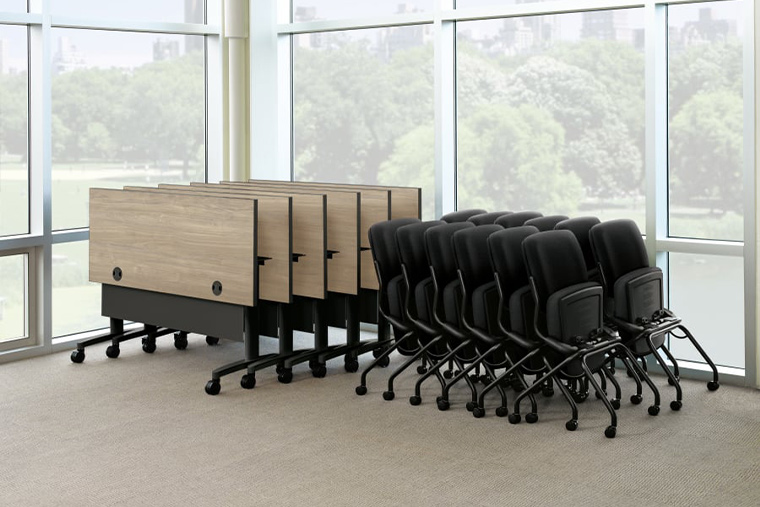
Folding training tables with wheels
Traing table adjusted into open office workstations.

In the world of startups and small businesses, versatility is key. Every piece of furniture should ideally serve more than one purpose to make the most of your limited space and budget. Imagine having a conference table that also functions as a communal workspace, or a desk that includes built-in storage compartments. These multi-functional pieces are essential for maximizing both space and utility. 

One of the best investments you can make is in modular furniture. Desks and tables that can be easily reconfigured to meet changing needs are perfect for a dynamic work environment. Whether you’re hosting a team meeting or need separate workstations, modular pieces adapt effortlessly. Items like foldable desks and mobile file cabinets are perfect examples of dual-purpose furniture. They can be easily moved or stowed away as required, offering you the flexibility to create an adaptable workspace.  

Gateway recognizes the importance of flexibility and offers a range of multi-functional office furniture designed to meet these needs. From modular desks to versatile storage solutions, our products help you create a productive and collaborative workspace, even in limited quarters. 

Space Saving Solutions 

Office desk with overhead storage.

Small businesses often operate in compact spaces where every square foot counts. Space-saving solutions are crucial in such environments. Think vertically to maximize your storage options — wall-mounted shelves and vertical file organizers are excellent ways to make use of underutilized space. Desks with overhead storage can also help keep your office tidy while providing easy access to essentials. 

Another effective approach is choosing furniture that can be tucked away when not in use. Stackable chairs and foldable desks offer the flexibility to create open space when necessary. Additionally, sliding doors or partitions can transform a single room into a multifunctional area without the need for permanent structures. 

Consider your office layout and how traffic flows through the space. Choosing streamlined furniture with clean lines can make a room appear larger and more open. At Gateway, we offer sleek and efficient space-saving designs that cater to the specific needs of small businesses, helping you create a functional workspace without compromising on style or aesthetic. 

Cost Effective Does Not Equal Cheaply Made 

Assembly line showing office chairs being assembled.

A common misconception is that cost-effective furniture equals poor quality; this couldn’t be further from the truth. It’s entirely possible to find budget-friendly office furniture that is well-made and durable. The key is to look for pieces that offer good value for money, balancing price with quality and functionality. 

Consider materials that are known for their durability, such as metal or hardwood, which can stand the test of time and frequent use. Opting for furniture with a warranty can also provide peace of mind and assurance of quality.  

At Gateway, we pride ourselves on providing affordable office furniture solutions that do not compromise on quality. Our procurement services are designed to help startups and small businesses furnish their offices with stylish and robust products within their budgets. We work closely with you to ensure that every piece of furniture meets your standards and supports your business goals. 

Your Trusted Partner in Office Furniture Selection 

Gateway employees installing office furniture.

Choosing the right office furniture is a critical step in creating a productive, efficient, and inviting workspace for your startup or small business. By focusing on multi-functional pieces, space-saving solutions, and cost-effective yet high-quality options, you can design an office that not only meets your current needs but also has the flexibility to grow with your company. 

Gateway is here to be your trusted partner in this journey. Our extensive range of versatile and durable office furniture is designed to help you maximize your space and budget without sacrificing style or quality. We understand the unique challenges faced by startups and small businesses, and our procurement services are tailored to meet those needs. Let us help you create a workspace that fosters productivity and success without breaking the bank. 

Let Us Plan Your New Space Today! 

How to Choose Brand-Aligned Office Furniture

Your office is more than just a place where work gets done—it’s a physical representation of your company and its identity. At Gateway, we understand that the office furniture you choose shapes your atmosphere, influences employee morale, and communicates your values to customers and clients. Whether your brand is sleek and modern, warm and traditional, eco-conscious and minimalist, or any combination thereof, our team helps you select pieces and products that align with your vision while enhancing functionality. 

1. Setting the Stage: How Office Furniture Defines Your Brand Identity 

Variety of fabric color samples

Every element of your office design, from the style of your desks to the color of your chairs, contributes to your brand’s visual identity. At Gateway, our commercial interior design team will help you curate a space that reflects your unique identity: 

  • Aesthetics: Our design experts guide you in selecting styles—whether modern, industrial, or classic—that embody your brand’s personality. 
  • Colors & Materials: From bold accent pieces to sustainable, eco-friendly options, we source furniture that aligns with your values. 
  • Custom Branding: Need desks with your logo or reception seating in your brand colors? We offer tailored solutions to make your space unmistakably yours. 

Let us help you create an office that leaves a lasting impression. 

2. Form Meets Function: Balancing Aesthetics and Practicality 

Collaborative zone
Private executive office
Reception Area

While aesthetics are important, functionality should never be overlooked. Before selecting furniture, assess the specific needs of different work areas. Gateway’s space planning specialists analyze your workflow to recommend layouts that maximize productivity: 

  • Collaborative Zones: We furnish open-plan areas with modular tables and flexible seating to encourage teamwork. 
  • Private Workspaces: For focus-driven tasks, we provide soundproof pods and ergonomic desks. 
  • Reception & Common Areas: Make a strong first impression with our selection of stylish yet functional lobby furniture. 

We ensure your office looks polished while supporting day-to-day operations. 

3. Designing for People: Ergonomics and Employee Well-Being 

Closeup view of person sitting in ergonomic office chair.

Your team’s comfort directly impacts their performance. Employees spend hours at their desks, so investing in ergonomic office furniture can prevent discomfort and even potential long-term health issues. At Gateway, we prioritize health-conscious design with: 

  • Ergonomic Seating: Our chairs offer adjustable lumbar support, breathable fabrics, and long-lasting comfort. 
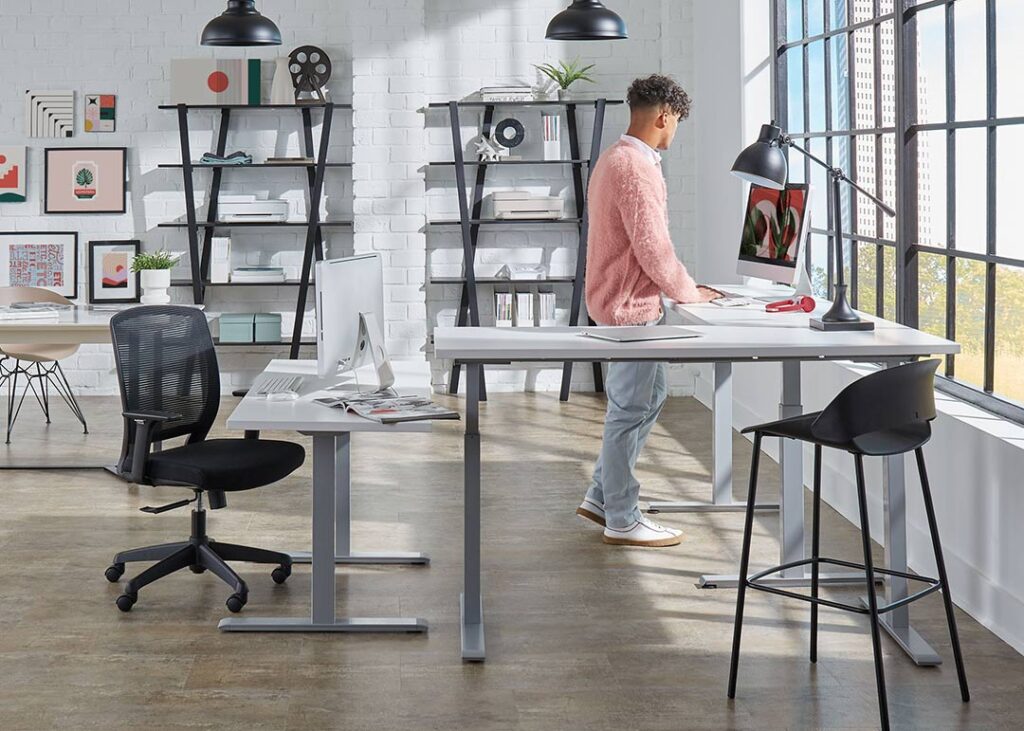
  • Standing Desks: Encourage movement with height-adjustable workstations. 
  • Wellness-Focused Layouts: We arrange workstations to optimize natural light and reduce strain. 

Investing in your employees’ well-being pays off—and we make it easy with science-backed solutions. 

4. Cultivating Culture: Furniture That Encourages Collaboration and Focus 

Business work area with a table and white boards

Space planning is equally important. Furniture should be arranged to maximize efficiency without overcrowding. Gateway helps you design spaces that foster your ideal culture: 

  • Team-Oriented? We outfit breakout rooms with lounge seating and writable surfaces for brainstorming. 
  • Need Quiet Zones? We can install acoustic panels and private work nooks for deep focus. 
  • Hybrid Workforce? Our flexible furniture options can adapt to changing needs. 

Let us create an environment where your culture thrives. 

5. Built to Last: Why Quality and Durability Matter 

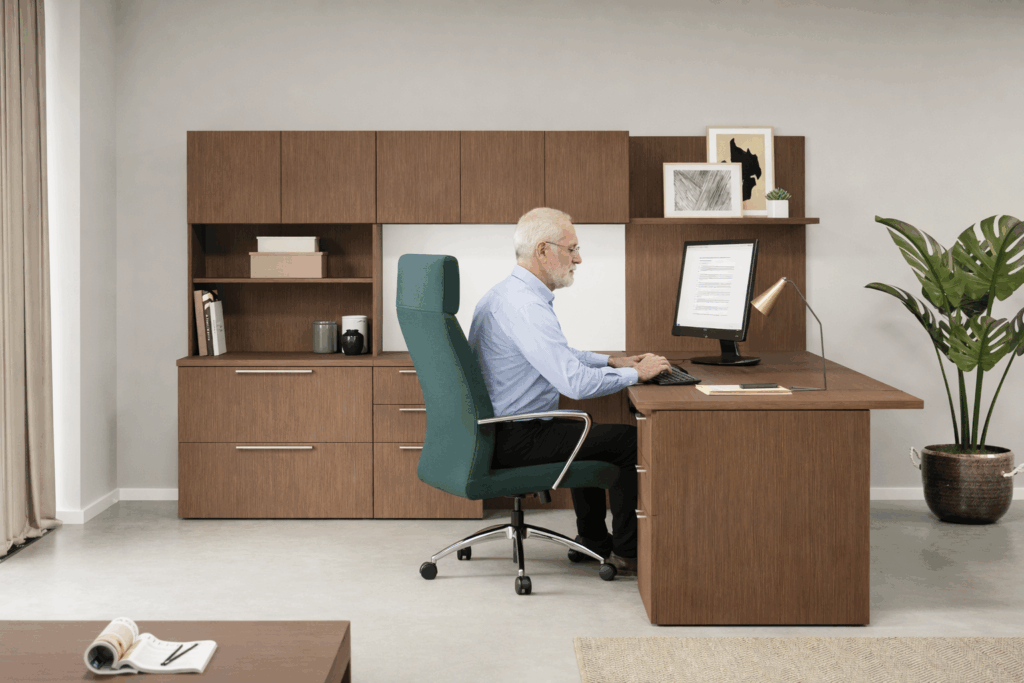
High quality, solid wood office furniture.

Office furniture is a long-term investment, so choosing durable, high-quality pieces saves money over time. Poorly constructed furniture may require frequent replacements, whereas well-crafted items withstand daily wear and tear while maintaining their appearance. Gateway only partners with manufacturers who create commercial-grade pieces designed to endure: 

  • High-Quality Materials: Solid wood, reinforced steel, and premium upholstery that withstand daily use. 
  • Warranty Protection: Many products come with extended warranties for peace of mind. 
  • Timeless Designs: Styles that stay professional for years, not trends that quickly fade. 

We help you invest wisely in furniture that performs as hard as your team does. 

6. Future-Proofing Your Workspace: Adaptable Design for Growing Businesses 

Your company evolves—your office should too. And your office furniture can either encourage or hinder the kind of workplace culture and growth you want to cultivate. Gateway specializes in scalable solutions: 

  • Modular Workstations: Easily reconfigure desks and partitions as teams expand. 
  • Multi-Functional Furniture: Foldable tables, mobile whiteboards, and stackable chairs for flexible spaces. 
  • Growth-Oriented Planning: We design with your future needs in mind, preventing costly redesigns. 

With our forward-thinking approach, your office grows seamlessly alongside your business. 

7. Final Touches: Infusing Personality into Your Office Design 

Stylish enclosed meeting room with warm natural tones, wood finishes, and a lush tropical plant.

The little details make your space feel more comfortable. And adding personality to your office reinforces company culture and makes the space more inviting. Gateway helps you add those finishing touches: 

  • Custom Art & Branding: Wall graphics, logo-printed floor mats, and promotional products. 
  • Biophilic Design: Live greenery and natural materials to boost mood and creativity. 
  • Signature Accents: Unique lighting, textured fabrics, and statement pieces that reflect your vibe and integrate company color schemes. 

We don’t just furnish offices—we help you create an environment that inspires. 

Let Gateway Design a Workspace That Works for You 

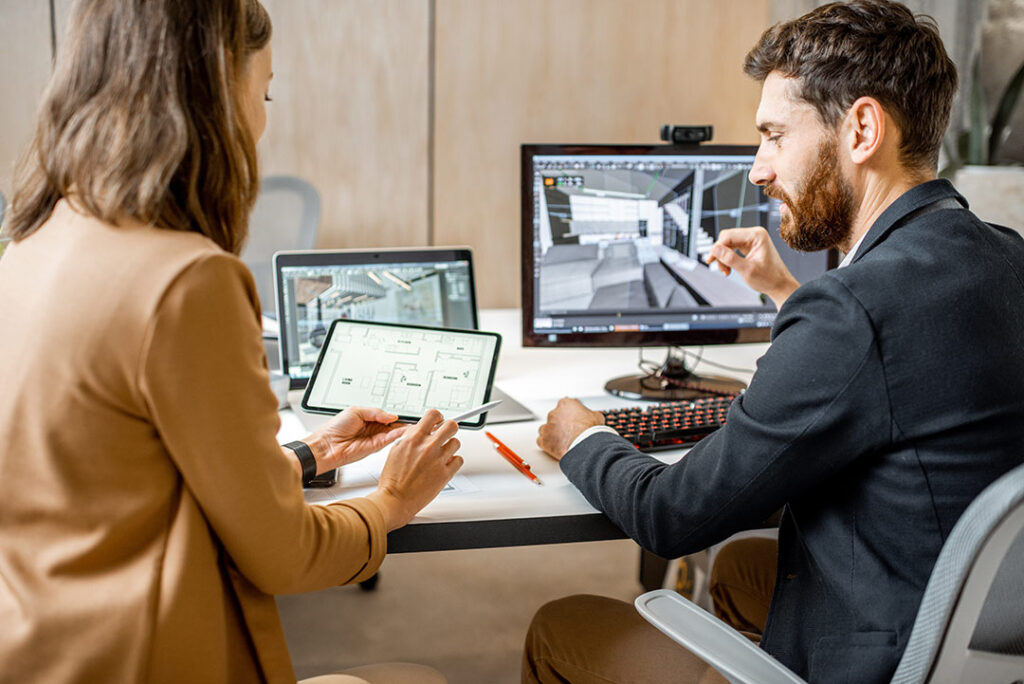
Interior designers at computers

Choosing office furniture is about more than filling a space—it’s about crafting an environment that empowers your team, impresses clients, and grows with your business. At Gateway, we combine expert design guidance, premium products, and tailored solutions to bring your vision to life. Contact us today for a consultation, and let’s build a workspace that reflects the best of your company—where productivity and culture thrive together. 

Your Perfect Office Awaits

The Evolution of Office Furniture: From Traditional Desks to Modern Workspaces

Office furniture has come a long way since the days of bulky wooden desks and rigid filing cabinets. The way we work has transformed dramatically—and so has the furniture that supports it. At Gateway, we’ve seen firsthand how design trends shift to meet the needs of different industries, from corporate offices to healthcare, education, and hospitality. 

Let’s take a quick journey through the evolution of office furniture and explore how modern innovations and solutions are shaping today’s workspaces. 

The Traditional Office: Function Over Flexibility 

Early century office.

In the early 20th century, offices were designed for hierarchy and efficiency. Think: heavy oak desks, high-walled cubicles, and rows of identical chairs—all built for individual, task-focused work. This setup worked well for traditional corporate environments where privacy and formality were prioritized. 

While this style still has its place in certain industries (like law firms or government offices, where confidentiality is key), many businesses have moved toward more dynamic, people-centric designs. 

The Shift to Modern Workspaces 

Modern office with workstations and couch.
Two people working on laptop on lounge
Student desk with built in electrical power solutions.

As workplace culture evolved, so did furniture design. Open floor plans, collaborative spaces, and ergonomic solutions became the new standard. Here’s how modern office furniture caters to different industries: 

1. Collaborative Workstations for Corporate & Tech Spaces 

Today’s corporate and tech companies thrive on teamwork. Modular workstations with adjustable desks, writable surfaces, and integrated power outlets encourage brainstorming and flexibility. Gone are the days of isolated cubicles—now, teams can easily shift from focused work to group discussions without missing a beat. 

What’s particularly interesting is how these designs have incorporated biophilic elements—natural wood finishes, living green walls, and ample natural light—to boost creativity and reduce workplace stress. Studies show that employees in thoughtfully designed collaborative spaces report higher job satisfaction and productivity. 

2. Lounge Seating for Creative & Hospitality Environments 

Creative agencies, coworking spaces, and hospitality businesses benefit from lounge-style seating—think sofas, café-height tables, and casual meeting pods. These setups foster a relaxed yet productive atmosphere, making them ideal for client meetings or informal team huddles. 

The psychology behind these spaces matters too. Soft seating arrangements in curved formations promote more open communication compared to traditional rectangular conference tables. Many modern lounge areas now incorporate acoustic panels and subtle zoning to create intimate spaces within larger open areas. 

3. Tech-Integrated Furniture for Education & Healthcare 

Schools, universities, and medical facilities need furniture that keeps up with technology. Height-adjustable desks for nurses, charging stations in classrooms, and mobile workstations for hospital staff ensure seamless functionality in fast-paced environments. 

In healthcare, we’re seeing a surge in antimicrobial surfaces and easy-to-clean materials—a necessity in post-pandemic design. Educational spaces now frequently feature furniture with built-in device management, allowing students to transition smoothly between digital and analog learning. 

4. Hybrid Solutions for Modern, Evolving Workforces 

With remote and hybrid work here to stay, offices now require adaptable furniture—hot-desking stations, Zoom-ready meeting booths, and soundproof phone pods help employees transition smoothly between home and office. 

The most successful hybrid spaces incorporate “neighborhood” concepts—dedicated zones for different work modes. Quiet focus areas sit alongside collaborative hubs, with flexible furniture that can be reconfigured as needs change throughout the day. Many companies are opting for lightweight, modular pieces on casters that can transform a space in minutes. 

The Right Furniture for Your Evolving Company 

No two workspaces are the same. A law firm may need classic, professional desks for a polished look, while a startup might prioritize movable whiteboard tables for agile thinking. At Gateway, we help businesses across every sector by designing offices that reflect their culture, enhance productivity, and support their team’s well-being. 

The key is understanding how your team actually works.  

  • Do they need heads-down focus spaces?  
  • Impromptu collaboration areas?  
  • Client presentation zones?  

The best office designs start with observing work patterns before selecting furniture solutions. 

Whether you’re furnishing a corporate headquarters, a clinic, a university, or a boutique hotel, the right furniture makes all the difference. Our design experts can help you create a space that balances functionality, aesthetics, and the unique needs of your team. After all, your workspace should inspire your best work—not just contain it. 

Ready To Transform Your Office?

Designing a Hybrid Office That Works for Everyone 

The modern workplace isn’t what it used to be. Gone are the days when employees clocked in, sat at the same desk, in the same cubicle, five days a week. Today’s workforce expects flexibility—the freedom to work from home some days and collaborate in the office on others. This shift means businesses need to rethink office design, creating spaces that are just as effective for the employee joining via Zoom as the one sitting across the table. 

At Gateway, we understand that a successful hybrid office isn’t just about squeezing in more desks—it’s about crafting an environment where people actually want to work. That means balancing flexibility with functionality, tech with comfort, and collaboration with focus. Here’s how to design a space that bridges the gap between remote and in-office work seamlessly.  

Why Hybrid Work Demands a New Approach to Office Design 

Hybrid office setting

Hybrid work is more than a trend—it’s the new normal. Studies show that employees now prioritize flexibility as much as salary when considering a job. But with teams splitting time between home and the office, companies face a challenge: how do you design a workspace that feels purposeful rather than obligatory? 

The answer lies in creating an office that offers something employees can’t get at home—better collaboration, smarter technology, and spaces that adapt to different needs. After all, if the office is just rows of silent desks and awkward conference calls, why would anyone bother coming in? 

Key Principles for a Hybrid-Ready Office 

Office collaborating area

1. Flexibility is Everything 

The biggest mistake companies make is assuming hybrid work just means fewer people in the office at once. In reality, it means workstyles change daily—one day, an employee might need deep focus, and the next, they could be leading a team brainstorm. 

That’s why rigid assigned seating no longer makes sense. Instead, opt for activity-based workspaces: adjustable desks for those who like to switch between sitting and standing, quiet nooks for concentration, and shared tables for impromptu teamwork. The goal is to give employees choice, so they can work the way they work best—whether that’s solo or side by side. 

2. Spaces That Encourage Real Connection 

If the office is going to compete with the comfort of home, it needs to offer something home can’t: effortless collaboration. That means moving beyond the traditional boardroom and creating zones that foster natural interaction. 

Small, tech-equipped huddle rooms make it easy for hybrid teams to meet without fuss, while lounge areas with whiteboards or screens encourage casual idea-sharing. Even something as simple as a well-placed coffee bar can become a hub for unplanned conversations—the kind that often lead to breakthroughs. 

3. Technology That Just Works 

Nothing derails productivity faster than technical difficulties. If remote teammates constantly struggle to hear or be heard, they’ll quickly disengage. The fix? Invest in intuitive tools that make hybrid collaboration feel natural. 

High-quality video conferencing systems, wireless screen-sharing, and digital whiteboards ensure everyone—whether in the room or online—can contribute equally. And with smart room-booking systems, employees can reserve spaces in advance, eliminating the frustration of hunting for an open meeting spot. 

4. Comfort That Keeps People Around 

An office that’s functional but uncomfortable won’t keep employees coming back. Ergonomic chairs, adjustable lighting, and thoughtful acoustics all contribute to a space where people can do their best work without distraction. 

Even small touches—ample power outlets, plants for a bit of life, or a mix of seating options—can make the office feel more inviting. After all, if employees are choosing to commute in, the experience should be worth the trip. 

The Future of Work is Flexible 

The best hybrid offices don’t just accommodate change—they embrace it. By designing spaces that adapt to different workstyles, foster real connection, and leverage technology seamlessly, companies can create workplaces that employees genuinely want to use. 

At Gateway, we specialize in helping businesses navigate this shift. Whether you’re redesigning an entire floor or just rethinking a few key areas, we can help you design a hybrid-ready office that works for everyone—no matter where they’re logging in from.  

Ready to make your office a place people choose to work? Let’s talk.

Small Space, Big Potential: Smart Solutions to Maximize Your Workspace

In today’s fast-evolving work environment, many businesses—whether startups, remote teams, or growing enterprises—find themselves working with limited office space. A cramped workspace can hinder productivity, creativity, and even employee morale. But with smart planning, strategic furniture choices, and creative layouts, even the smallest office can feel open, efficient, and inspiring. 

At Gateway, we specialize in helping businesses make the most of their space—without compromising on style or functionality. Below, we’ve put together practical, no-nonsense tips to transform your compact office into a highly functional workspace. 

Commercial Interior Design from Gateway

1. Double the Function: Multi-Functional Furniture

Multifunctional tables converted into a meeting room.

When square footage is limited, every piece of furniture should pull double duty. Instead of bulky, single-purpose items, opt for smart designs that combine storage, seating, and workspace into one. 

  • Desks with Built-In Storage: Skip the traditional desk and choose one with drawers, shelves, or even a fold-down surface to save space. 
  • Convertible Tables: Need a meeting area that disappears when not in use? A fold-out or nesting table keeps your floor plan flexible. 
  • Storage Seating: Ottomans, benches, and even chairs with hidden compartments provide extra seating and let you stash away office supplies. 

By selecting furniture that serves multiple needs, you reduce clutter and free up valuable real estate. 

2. Flexible by Design: How Modular Furniture Adapts to Your Changing Needs 

cubicles provide space to work

Static furniture can make a small office feel rigid and cramped. Modular designs, on the other hand, let you reconfigure your space as needs evolve. 

  • Modular Workstations: Instead of fixed desks, consider units that can be rearranged for collaboration or solo work. 
  • Adjustable Shelving: Wall-mounted or freestanding systems can be customized to fit your storage needs without eating up floor space. 
  • Mobile Carts & Dividers: Rolling desks, portable whiteboards, and movable partitions allow for quick transformations without a full redesign. 

Remember, go with furniture that grows with your business—not against it. 

3. Look Up! Creative Ways to Use Vertical Space for Storage & Style 

Compact workstation with pegboard and upper storage cabinets.

When floor space runs out, think up, literally. Walls and even ceilings offer untapped potential for storage and organization. 

  • Floating Shelves & Wall-Mounted Cabinets: Keep essentials accessible without crowding desks. 
  • Pegboards & Grid Panels: Perfect for hanging supplies, notes, or small tools—they’re functional and visually appealing. 
  • Tall Bookcases & Vertical File Systems: Maximize storage without expanding outward. 

Vertical solutions keep your workspace open and airy while ensuring everything has its place. 

4. Light, Bright, & Right: Design Tricks to Make Your Office Feel Larger 

use of lighting in office spaces

A well-lit, visually open space feels bigger—even if the square footage stays the same. 

  • Light Colors & Reflective Surfaces: Incorporate soft neutrals, whites, and glass or acrylic finishes to enhance brightness. 
  • Mirrors: Strategically place them to reflect light and create depth. 
  • Layered Lighting: Combine overhead, task, and accent lighting to eliminate dark corners. 

Even in a small office, the right aesthetic choices can make a dramatic difference. 

5. The Flow Factor: Smart Layouts That Make Every Inch Count 

Small office space with workstations and collaborative areas.

A thoughtful floor plan ensures smooth movement and minimizes wasted space. 

  • Open Zones: Keep high-traffic areas clear of obstructions. 
  • Corner Utilization: Place desks or storage in underused corners to maximize efficiency. 
  • Hybrid Workstations: Combine seating and storage in compact arrangements to serve multiple employees. 

A well-organized layout makes a small office feel intentional—not cramped. 

6. Less Clutter, More Productivity: Simple Habits to Keep Your Small Office Tidy 

Customer filling out electronic form on tablet.

No matter how efficient your furniture is, clutter will always make a space feel smaller. 

  • Go Digital: Reduce paper usage with cloud storage and digital tools. 
  • The 80/20 Rule: Keep only your daily essentials within reach; store everything else. 
  • Regular Decluttering: Routinely reassess supplies and furniture and get rid of whatever you no longer need. 

A clean workspace enhances both productivity and the perception of space. 

Gateway: Big Ideas for Small Spaces 

Man looking at 3D rendering on tablet.

At Gateway, we design office layouts that help businesses thrive—no matter their size. From modular workstations to space-saving storage, our furniture and supplies options blend smart functionality with modern aesthetics. Whether you’re furnishing a home office, a startup hub, or a corporate satellite space, we offer thoughtfully curated pieces that adapt to your needs without overwhelming your environment.  

A compact office doesn’t have to mean limited potential. With the right strategies—multi-functional furniture, modular flexibility, vertical storage, and smart layouts—you can create a workspace that feels open, organized, and inspiring. 

Ready to transform your office? Let’s make every square foot count.  

Get in With Gateway

Creating a Greener Office: Simple, Sustainable Solutions for Texas Businesses 

Let’s be honest – when you hear “sustainable office design” you might picture expensive bamboo floors or complicated solar panel systems. Sustainable office solutions make your office a better place to work, but what if going green at work was also simple and affordable? Good news, it can be! 

At Gateway, we help Texas businesses just like yours create workspaces that are kinder to the planet – without sacrificing style, comfort, or your budget. Whether you’re in Corpus Christi, San Antonio, or anywhere in between, we’ve got practical solutions that make sense for our unique Texas climates and business needs.  

Myth vs. Fact: Sustainable Office Edition 

Myth

“Going green means ugly, expensive furniture”

Fact

Today’s sustainable options look better and often last longer than conventional furniture – with comparable price tags.

Myth

“Our small office can’t make a real difference”

Fact

Even basic changes (like LED bulbs or smart power strips) create measurable impacts when adopted by many businesses.

Myth

“Sustainability is all-or-nothing”

Fact

Gateway specializes in phased approaches – start with one department/focus area and expand over time.

Myth

“It’s too hard to maintain”

Fact

Modern sustainable designs are actually easier to clean and maintain (no special treatments required).

Why Going Green at Work Matters
(More Than You Think) 

You’ve probably noticed – today’s employees want to work for companies that share their values. Here’s what we’re seeing: 

  • 8 out of 10 employees say they’d choose a job at an eco-friendly company over one that isn’t. 
  • Offices with good natural light and fresh air see fewer sick days and happier teams. 
  • Smart energy choices can cut your utility bills by 30% or more. 

Making Sustainability Simple: Where to Start 

Going green doesn’t require a complete office overhaul — small, strategic changes make a big impact. These simple steps reduce costs while creating a healthier, more sustainable workplace: 

1. Smarter Office Design = Happier Employees 

We’re not talking about fancy architecture – just common-sense design layouts that work better for your employees: 

  • Let the sunshine in: Simple desk rearrangements can give everyone access to natural light while cutting down on electric bills. 
  • Breathe easier: Adding a few air-purifying plants like snake plants or peace lilies helps clean the air naturally while adding a biophilic touch.  
  • Flow matters: When workstations are arranged logically, air flows better and optimizes your HVAC systems.  

2. Furniture That Feels Good and Does Good 

Forget the scratchy, “granola” office furniture of the past. Today’s sustainable office pieces combine eco-conscious materials with premium comfort and style – proving you don’t need to sacrifice aesthetics for sustainability. Discover: 

  • Responsibly sourced wood with FSC-certified finishes that look as polished as they are planet-friendly. 
  • Plush seating crafted from recycled materials, including chairs made with ocean-recovered plastics—durable enough for Texas-sized workdays. 
  • Smart, adaptable desks and modular designs that evolve with your team, reducing long-term waste. 
  • Non-toxic fabrics that are softer, cleaner, and easier to maintain than traditional options. 

3. Easy Daily Habits That Add Up 

Sustainability isn’t just about what you buy—it’s how your team uses it daily. Small habit shifts create big impacts when adopted office-wide: 

  • Lighting smarts: Install motion sensors in low-traffic areas like storage rooms and program LEDs to dim during peak daylight hours – cutting energy use by up to 40%. 
  • Print less, save more: Set all printers to double-sided default, reducing paper costs annually.  
  • Breakroom basics: Replace disposable cups with branded mugs and place clearly labeled recycling stations next to every trash can – diverting 60% of office waste from landfills. 
  • Digital discipline: Cloud-based file sharing and “paperless meeting” policies eliminate clutter while improving organization. 

Why Texas Businesses Choose Gateway 

We get it – you’re busy running your company. That’s why we make going green easy: 

  • We speak Texas: We understand our unique climates and business needs. 
  • No “one-size-fits-all”: Our solutions are tailored to your space and budget. 
  • Real-world practicality: We recommend what actually works, not just what’s trendy. 

As businesses in Corpus Christi, San Antonio, Austin, Houston, and beyond look to the future, sustainable office design is no longer optional – it’s essential. By choosing eco-friendly furniture and adopting green practices, you create a workspace that benefits your team, your bottom line, and the planet. 

Go Green with Gateway

The Role of Ergonomic Office Furniture in Business Success

In today’s fast-paced work environment, businesses are increasingly recognizing the importance of ergonomics—not just as a means of preventing injuries, but as a key factor in creating workspaces where employees can thrive. Ergonomics, the science of designing workspaces to fit the needs of the user, is about more than just comfort. It’s about fostering environments that support health, boost productivity, and enhance overall well-being. 

From adjustable chairs and standing desks to wrist-friendly keyboards and beyond, ergonomic solutions are transforming workplaces across industries. At Gateway, we’re here to help businesses of all sizes create spaces that prioritize people. And with ergonomic furniture, you will be one step closer to that goal.  

Why Ergonomics Matters 

Think about it: how many hours a day do we spend at our desks? For many of us, it’s a significant portion of our lives. Poorly designed workspaces can lead to a range of issues, including musculoskeletal problems like back pain, neck strain, and carpal tunnel syndrome, as well as fatigue, decreased productivity, and increased absenteeism and turnover. On the flip side, ergonomic furniture and accessories can reduce workplace injuries, improve employee morale and engagement, enhance productivity and efficiency, and support long-term health and well-being. 

Key Ergonomic Solutions for Every Workspace 

Ergonomic Task Chair

1. Adjustable Chairs 

A good chair is the foundation of any ergonomic workspace. Adjustable chairs with lumbar support, seat depth adjustment, and armrests help employees maintain proper posture and reduce strain on their backs and necks. In corporate offices, these chairs keep employees comfortable during long hours at their desks. In healthcare facilities, they provide ergonomic seating for administrative staff and doctors on the go from patient to patient. For educational institutions, they support teachers and students during lectures or study sessions, and in legal firms, they ensure comfort for attorneys and paralegals during extended work hours. 

2. Standing Desks 

Standing desks allow employees to alternate between sitting and standing throughout the day, promoting better circulation and reducing the risk of sedentary-related health issues. In tech companies, they encourage movement and creativity among developers and designers. In corporate offices, they help employees stay energized and focused. For healthcare facilities, they provide flexible workstations for nurses and administrative staff, and in educational institutions, they support dynamic teaching styles in classrooms. 

3. Wrist-Friendly Keyboards and Mice 

Ergonomic keyboards and mice are designed to reduce strain on the wrists and hands, preventing debilitating conditions like carpal tunnel syndrome. In corporate offices, they protect employees who spend long hours typing. In legal firms, they support paralegals and attorneys during document preparation. For healthcare facilities, they ensure comfort for administrative staff managing patient records, and in educational institutions, they help students and faculty during research or writing tasks. 

4. Monitor Arms and Adjustable Screen

Proper screen placement is essential for reducing both neck and eye strain. Monitor arms and adjustable screens allow employees to position their monitors at the correct height and distance. In corporate offices, they improve focus and reduce fatigue for employees working on computers. In healthcare facilities, they support doctors and nurses reviewing patient data from differing heights. For educational institutions, they enhance comfort for students and teachers using digital tools. 

5. Footrests and Anti-Fatigue Mats 

Footrests and anti-fatigue mats provide additional support for employees who stand or sit for long periods of time, improving circulation and reducing discomfort. In corporate offices, they enhance comfort for employees using standing desks. In healthcare facilities, they support nurses, doctors, and technicians on their feet all day. For hospitality spaces, they provide relief for hotel and restaurant staff, and in educational institutions, they help teachers and students during long lectures or lab sessions. 

6. Task Lighting 

Proper lighting reduces eye strain and headaches, creating a more comfortable and productive workspace. Adjustable task lighting ensures employees have the right amount of light for their tasks. In corporate offices, it improves focus and reduces eye strain in dimly lit areas. In legal firms, it supports detailed document review and case preparation. For healthcare facilities, it ensures accurate reading of patient charts and records, and in educational institutions, it enhances visibility and inclusivity in classrooms and libraries. 

The Business Case for Ergonomics 

Office workers collaborating

Investing in ergonomic furniture isn’t just good for employees—it’s good for business. By reducing workplace injuries, businesses can save on healthcare and workers’ compensation expenses. Healthier employees are less likely to take sick days, leading to fewer disruptions and higher productivity. Comfortable employees are more focused, efficient, and engaged in their work, fostering a culture of care and well-being. Additionally, a commitment to employee well-being enhances a company’s reputation, attracting top talent and reducing turnover. 

Tailored Ergonomic Solutions for Every Industry 

Office workers collaborating

At Gateway, we understand that every industry has unique ergonomic needs. For corporate offices, we help create comfortable, efficient workspaces with adjustable chairs and standing desks. In healthcare facilities, our ergonomic solutions support doctors, nurses, and administrative staff in high-stress environments. For educational institutions, we provide furniture and accessories that promote comfort and focus for both students and teachers. In legal firms, our ergonomic desks and chairs ensure comfort during long hours of case preparation, and for hospitality spaces, we offer solutions that keep hotel and restaurant staff comfortable and productive. 

How Gateway Can Help You Get Started with Ergonomics 

Ergonomic Workstation

Thinking about integrating ergonomic solutions into your workspace but not sure where to begin? At Gateway, we’re here to guide you every step of the way. Our team of experts will work with you to assess your current setup, identifying areas where employees may be experiencing discomfort or inefficiency—whether it’s poor posture, inadequate lighting, or furniture that lacks adjustability. 

We’ll help you prioritize key investments, starting with foundational pieces like adjustable chairs and standing desks, and then expanding to accessories like monitor arms, footrests, and task lighting. And we deliver! Once your new ergonomic solutions are in place, if adjustments are needed, we’ll be there to fine-tune your setup until it’s just right.  

At Gateway, we’re passionate about creating workspaces that prioritize people. Let us help you take the first step toward a healthier, more productive workplace. Contact us today to get started! 

Get a Free Furniture Consultation.

NEOCON 2024: Unveiling Future Office Furniture Trends

The NEOCON 2024 event showcased an exciting array of trends that are set to shape the future of office furniture design. With a focus on sustainability, technological integration, wellness-focused environments, adaptive furniture, and bold color schemes, attendees were able to experience innovative solutions that blend aesthetics with functionality. Gateway is here to highlight the top trends seen at NEOCON 2024 that we believe will be most used by companies in the coming years. 

Commercial Interior Design with Gateway!

Adaptive Furniture for Flexible Workspaces 

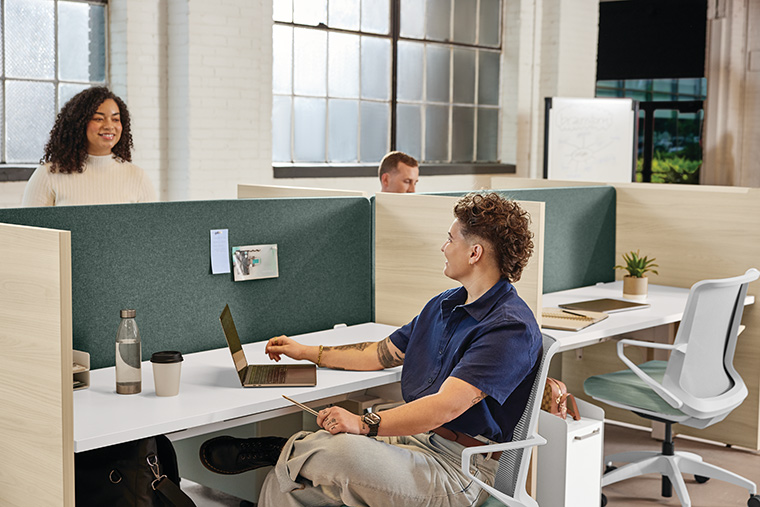
Adaptive office workstations with private portals.

The world of work is evolving, and NEOCON 2024 showcased how adaptive furniture is at the forefront of this transformation. As businesses navigate the shift towards more remote and hybrid models, the demand for flexible, multipurpose office spaces has never been higher. Enter the era of adaptive furniture – a trend that embodies versatility and functionality, ensuring workspaces can easily pivot to meet the varied needs of today’s dynamic workforce. 

Imagine furniture that not only fits the space but also morphs to suit the task at hand. Desks that transition from individual workstations to collaborative hubs with minimal effort, movable partitions that can create private nooks or open spaces on the fly, and seating solutions that offer comfort and mobility for a range of activities. This innovative approach to office furniture design is about more than just saving space; it’s about creating environments that empower employees to choose how and where they work best. 

At NEOCON 2024, the spotlight was on designs that can effortlessly adapt to changing work styles, promoting a seamless integration of flexibility, comfort, and productivity. These adaptable furniture solutions are not just a response to the emerging trends in workplace dynamics; they’re setting the standard for a future where workspaces are as fluid and adaptable as the departments that use them on a given day. By embracing adaptive furniture, companies are not just investing in physical assets; they’re investing in the agility and wellbeing of their workforce. 

Embracing Sustainability in Office Furniture 

seen at NEOCON 2024

At NEOCON 2024, sustainability wasn’t just a trend—it was a mission. The drive towards eco-friendly office furniture highlighted an industry-wide commitment to a greener future. Innovators at the forefront showcased designs that prove functional beauty and environmental stewardship can go hand in hand. By incorporating materials that have been reclaimed or recycled, these forward-thinkers are paving the way for office furniture that reduces waste without sacrificing style or durability. Moreover, energy-efficient production processes are being embraced, spotlighting a shift towards reducing carbon footprints across the board. This move towards sustainable office furniture is more than just a nod to environmental concerns; it’s a reflection of a changing corporate ethos that values the health of the planet and its people equally. By integrating these sustainable solutions, companies are not only making a statement about their values but are also enhancing the overall wellness and satisfaction of their workforce. 

Technological Integration for Smarter Workspaces 

seen at NEOCON 2024

Technological innovation took center stage at NEOCON 2024, unveiling a future where office furniture isn’t just about sitting or standing; it’s about engaging and connecting. Imagine a workspace where your desk not only adjusts to your preferred height but also reminds you to stand after prolonged periods of sitting, thanks to built-in smart technology. These aren’t concepts of the distant future; they are the trends shaping our offices now. With furniture integrated with new capabilities, workspaces are becoming more responsive to our needs, offering insights into our health and productivity patterns. Ergonomic smart chairs equipped with sensors not only alert you to adjust your posture but also track your movement throughout the day, ensuring that wellness is not an afterthought. This tech-forward approach is revolutionizing how we interact with our work environments, seamlessly blending the digital and physical worlds to create spaces that are not only more efficient but truly attuned to the well-being of their occupants. As we move towards this exciting future, embracing technology in office design is not just about keeping up with the times; it’s about setting new standards for comfort, productivity, and health in the workplace. 

Creating Wellness-Focused Work Environments

seen at NEOCON 2024

The trend of prioritizing employee wellness within office spaces took the spotlight at NEOCON 2024, underscoring the evolving understanding of how workspace design directly impacts health and productivity. Innovative designs incorporating natural elements, ample daylight, and ergonomic features exemplify how workplaces are transforming into environments that nurture well-being. Recognizing the crucial role of physical and mental health in overall performance, designers and companies are increasingly adopting principles that place employee wellness at the core of office planning. Elements like living walls, natural wood finishes, and spaces designated for relaxation and meditation are becoming standard, reflecting a holistic approach to workplace health. These environments not only elevate the mood and vitality of employees but also signal a company’s dedication to supporting a balanced, healthy lifestyle. This shift towards wellness-centric office spaces is reshaping expectations, showing that a thoughtfully designed environment can be a powerful tool in fostering a happy, engaged, and productive workforce. 

Bold Colors and Expressive Designs in the Workplace 

bold colors seen at NEOCON 2024

This year’s NEOCON 2024 brought a refreshing burst of vibrancy into office design with its embrace of bold colors and expressive designs. Moving away from the muted palettes that have dominated office spaces for years, the trend now leans towards incorporating lively hues and imaginative patterns that infuse work environments with personality and zest. Think electric blues, energizing yellows, and revitalizing greens creating spaces that not only stimulate creativity but also elevate the mood. These audacious choices in colors and textures represent more than just an aesthetic shift; they are a testament to the evolving dynamics of workplace culture, where environments are designed to inspire and engage. Through the careful integration of these elements, offices are transformed into vibrant havens that encourage collaboration and innovation. It’s clear that in the realm of commercial design, expressing a company’s unique identity through color and design has become as important as functionality, paving the way for workspaces that are as visually stimulating as they are productive. With NEOCON 2024 highlighting these trends, it’s an exciting time to rethink and rejuvenate office aesthetics for a more dynamic and expressive future. 

Explore Gateway’s Versatile Training Table Furniture

When it comes to creating functional and versatile spaces, furniture plays a crucial role. This is especially true in educational and professional settings, where the design and layout of a room can greatly impact the overall learning or meeting experience. Gateway, a leading furniture distributor based in South Texas, understands this importance and offers a wide range of training table style furniture that is suitable for various environments, from K-12 classrooms to corporate conference rooms. Time to explore the versatility of Gateway Furniture’s training table styles and how they can enhance the functionality and aesthetics of any space. 

Training Table Furniture in K-12 Classrooms

When it comes to modern education, K-12 classrooms are increasingly adopting innovative approaches to learning. One reason is flexibility. Training tables can be easily configured and rearranged to accommodate different teaching styles and activities. Whether it’s a group project, a presentation, test-taking, or individual work, training tables can be arranged in various formations to meet the needs of the students, teachers, and the lesson at hand.  

Another advantage of training table furniture is its ergonomic design. Traditional desks and chairs often lead to poor posture and discomfort, resulting in distracted and restless students. Training tables, on the other hand, are designed to provide comfort and support, allowing students to focus and engage in their learning. 

Furthermore, training tables can help maximize space utilization in crowded classrooms. With their modular and nesting designs, these tables can be easily stored and moved when not in use, creating a more flexible and efficient learning environment. 

The use of training table furniture also encourages collaboration among students. By creating a more open and interactive learning space, students are encouraged to work together, share ideas, and learn from one another. This collaborative approach not only improves academic performance but also fosters important social skills and prepares students for the real world. 

As educators strive to create dynamic, versatile, and engaging learning environments, training tables are proving to be a valuable addition to any classroom setting. With Gateway’s range of training table furniture, schools can transform their traditional classrooms into innovative and functional spaces that inspire learning and collaboration.  

Emphasizing Efficiency in Government & Corporate Offices 

In today’s fast-paced world, efficiency is a key priority for government and corporate offices. Every minute counts, and optimizing the workspace is essential for productivity. This is where training table furniture from Gateway can make a significant impact. 

One of the main advantages of training table furniture in government and corporate offices is its adaptability. These tables can be easily configured and reconfigured to accommodate different needs, whether it’s a team meeting, a training session, or a presentation. With just a few simple adjustments, the workspace can be transformed to meet the specific requirements of the task at hand. 

Additionally, training tables offer enhanced organization and storage capabilities. Many models come equipped with built-in wire management solutions, allowing for a clutter-free and efficient workspace. Cables and wires can be neatly tucked away, preventing tripping hazards and creating a clean, organized, and professional environment. 

Another benefit of training table furniture is its modular design. Many tables can be easily nested to accommodate changing needs. If the office is expanding, training tables can be easily stored for later use to grow with the company. 

Moreover, training table furniture promotes collaboration and teamwork in government and corporate offices. By providing a flexible and interactive workspace, these tables encourage employees to work together, share ideas, and collaborate on projects. This not only enhances productivity but also fosters a sense of camaraderie and creativity among team members. 

Creative Uses Abound in Higher Education 

In higher education settings, fostering collaborative and modular environments is essential for student engagement and success. Training table furniture from Gateway offers the perfect solution for creating dynamic and interactive learning spaces in colleges and universities. 

One of the main benefits of training table furniture in higher education is its ability to promote collaboration among students. These tables can be easily configured into various formations, such as small group circles or larger conference-style arrangements, to facilitate teamwork and discussion. By providing a comfortable and versatile workspace, training tables encourage students to work together, share ideas, and engage in meaningful dialogue. 

Moreover, training table furniture in higher education enhances flexibility and adaptability. As classrooms evolve to accommodate different teaching styles and activities, these tables can be easily rearranged to meet the specific needs of the lesson. Do you prefer your students to sit in a U-shape while being taught? What about traditional row-style seating? Or perhaps a circle? The opportunities are endless when you use training tables.  

In addition to promoting collaboration and flexibility in the corporate world, training table furniture in higher education also prioritizes functionality and organization. And what’s good for the goose is good for the gander. Many models come equipped with built-in wire management solutions, allowing for a clutter-free workspace. Students can easily connect their devices and access power sources, creating a seamless and efficient learning experience. 

By incorporating training table furniture from Gateway, colleges and universities can transform their classrooms into collaborative environments that foster teamwork, creativity, and engagement. Students will benefit from the versatile and ergonomic design of these tables, enhancing their learning experience and preparing them for the collaborative nature of the professional world. With Gateway’s range of training table furniture, higher education institutions can create the ideal learning spaces that inspire innovation and collaboration. 

Expanding Business in Hotels and Conference Spaces 

In today’s fast-paced business world, hotels and conference spaces are constantly striving to create functional, and versatile environments for their guests. Training table furniture from Gateway offers the perfect solution for these establishments, providing a range of benefits that enhance the overall experience. 

One of the main advantages of training table furniture in hotels and conference spaces is its adaptability. These tables can be easily configured and rearranged to accommodate different types of events, whether it’s a corporate meeting, a training session, or a social gathering. With just a few simple adjustments, the space can be transformed to meet the specific needs of the occasion. 

Another benefit of training table furniture is its sleek and modern design. These tables add a touch of sophistication to any space, elevating the overall aesthetic and creating a professional atmosphere. Guests will be impressed by the attention to detail and the commitment to providing a comfortable and functional workspace. 

By providing a versatile and interactive workspace, these tables encourage guests to work together, share ideas, and engage in meaningful discussions. This fosters a sense of teamwork and creativity, enhancing the overall success of the event. 

With Gateway’s range of training table furniture, hotels and conference spaces can create the ideal environments that inspire innovation, collaboration, and productivity.  

Gateway Furniture Has What You Need 

Whether you’re looking to revamp your K-12 classrooms, optimize efficiency in government and corporate offices, create dynamic learning spaces in higher education, or elevate the experience in hotels and conference spaces, Gateway has got you covered. Their training tables offer flexibility, ergonomic design, adaptability, and enhanced organization capabilities. 

Gateway Furniture understands the importance of creating functional and versatile spaces, and they are dedicated to providing high-quality furniture that meets your specific needs. So, whether you’re an educator, a business professional, or an event organizer, trust Gateway Furniture to provide the perfect training table solution for you. Upgrade your space and elevate your experience with Gateway Furniture today! 

Get in With Gateway!