Maximize Your Workspace with Office Space Efficiency Audits  

Maximize Your Workspace with Office Space Efficiency Audits 

Every square foot of office space represents a significant investment, yet many organizations waste thousands annually on underutilized areas and inefficient layouts. The most successful companies understand that efficiency isn’t about cramming more people into less space—it’s about ensuring every square foot serves a clear purpose that is aligned with your business objectives. 

As commercial real estate costs continue to rise, businesses that pay premium rates for every square foot they lease or own suffer greatly when they have inefficient office layouts. When portions of your office sit underutilized or create workflow bottlenecks, you’re essentially paying rent on dead zones that generate zero return on investment. Strategic space planning has emerged as a direct cost-saving measure that appeals to CFOs and economic planners looking to measure efficiency gains. The financial impact extends beyond lease payments and includes payments on utilities, maintenance, and climate control for areas that contribute little to your bottom line. All of it adds up quickly. 

That’s where office space efficiency audits come into play. By uncovering areas where you can improve agility, margins, and workplace culture, a comprehensive space efficiency audit reveals opportunities to maximize your ROI while boosting productivity.   

Here are helpful tips for analyzing your space, identifying areas that could be better utilized, and ultimately maximizing your square footage. 

Using Frame Space Planning to Conduct Your Space Efficiency Audit 
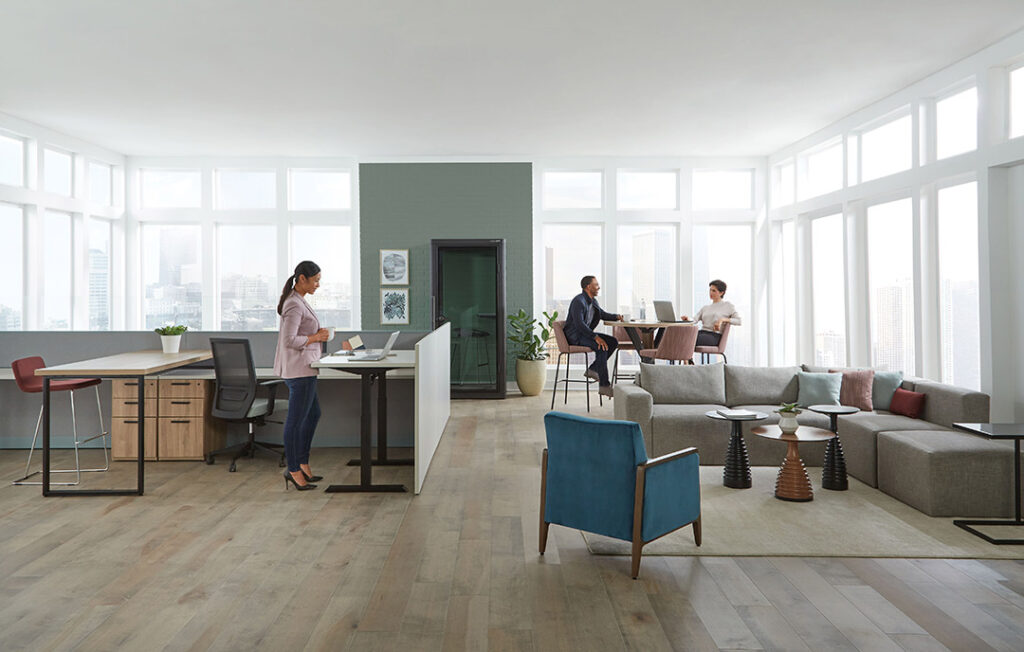
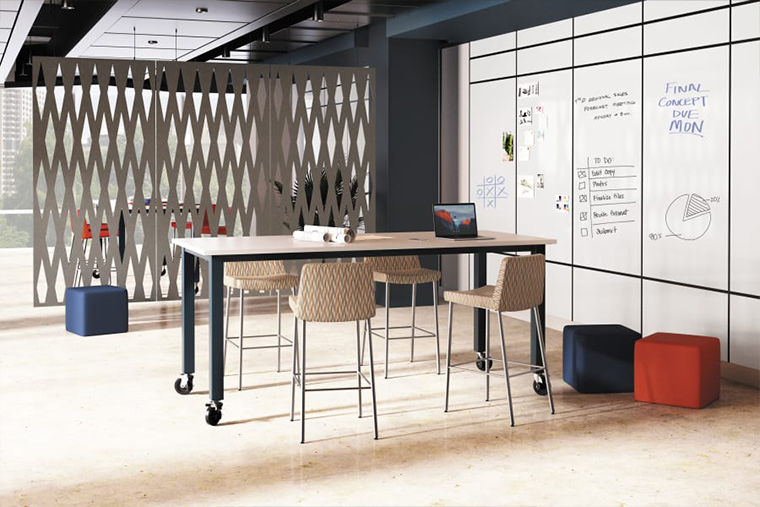
Open office setting with workstations, privacy booth, collaborating zone, and lounge area.

Frame space planning is a systematic methodology for analyzing and optimizing workspace utilization. This approach examines how your physical environment supports or hinders business objectives, employee productivity, and operational efficiency. Unlike cosmetic renovations or furniture upgrades, frame space planning addresses the fundamental structure of how space is allocated and used. 

The process begins with comprehensive data collection, including occupancy patterns, departmental workflows, growth projections, and employee feedback. Advanced space planning tools can track actual usage rates, revealing the gap between perceived and real space needs. This data-driven approach ensures decisions are based on objective metrics rather than assumptions. To break it down step by step, frame space planning looks like this: 

By understanding traffic patterns, collaboration requirements, and functional needs, businesses can redesign layouts that eliminate waste while improving workplace experience.  

What’s a Dead Zone in Your Office Layout? 
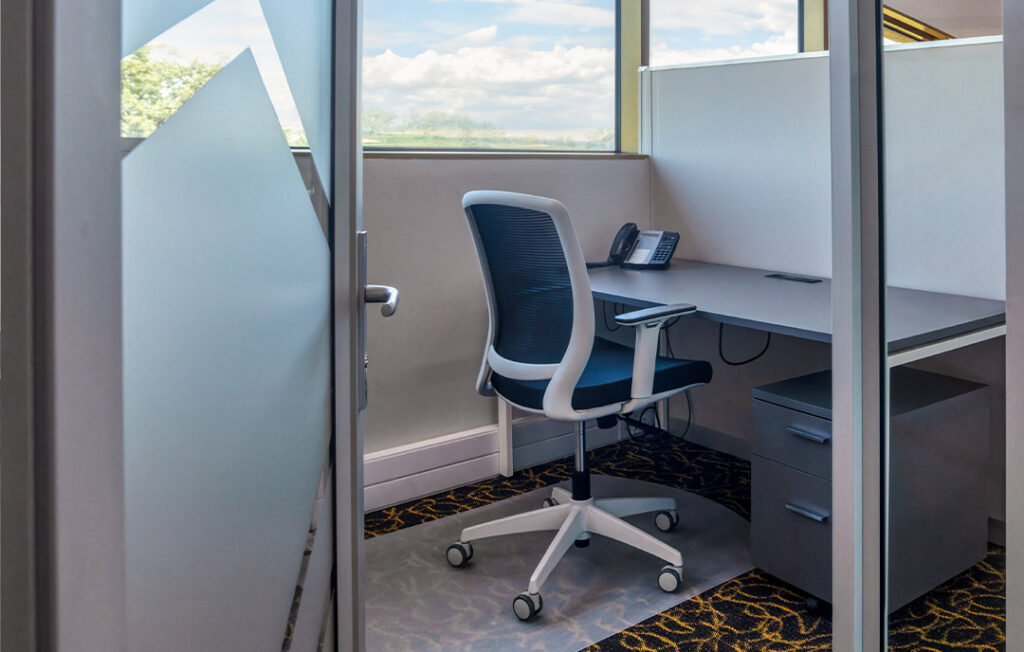
Empty, unused office cubical.

Dead zones are areas within your workspace that don’t serve a clear purpose or remain consistently underutilized. Common examples include oversized conference rooms that sit empty most of the day, wide corridors that consume premium square footage, unused corner spaces that become storage dumping grounds, and poorly configured break areas. 

These inefficiencies will cost you over time. A 200-square-foot dead zone in a facility that costs $35 per square foot will cost your organization $7,000 annually in wasted rent alone. Multiply this across multiple under-performing areas, and the financial impact becomes substantial.  

Solutions for Space Optimization 
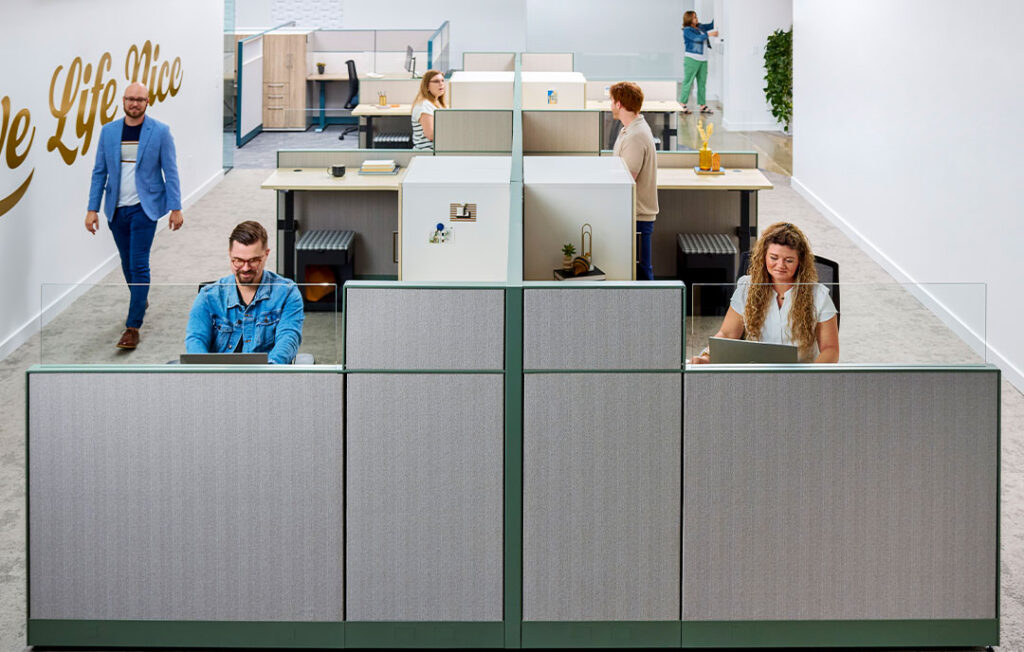
Upbeat energetic office space setting.

Once you have identified your problem areas, you can get to work optimizing your space. The following are proven methodologies and innovative design solutions that address common space efficiency challenges.  

Flexible Workspace Design 

Modular furniture systems and adaptable layouts allow spaces to serve multiple functions throughout the day. Conference rooms can transform into collaborative work areas, and private offices can open into team zones when needed. This flexibility ensures that spaces remain productive rather than sitting idle. 

Right-Sizing Conference and Meeting Spaces 

Many organizations over-invest in large conference rooms that rarely reach capacity. Although meetings often involve four or fewer people, many companies allocate substantial square footage to 12-person boardrooms. By creating a mix of appropriately sized meeting spaces, including huddle rooms and phone booths, businesses can reduce their conference room footprint while improving meeting availability. 

Evaluating and Reconfiguring Circulation and Common Areas 

Wide corridors and oversized lobbies often consume 20-25% of total office space. Look for ways to narrow walkways (while keeping them functional for those with disabilities), reclaim underutilized lobby space, and convert excessive common areas into productive work zones without sacrificing comfort or accessibility. 

Strategic Storage Solutions 

Disorganized storage represents one of the most common space inefficiencies. Vertical storage systems, centralized supply stations, and digital document management integration, among other workplace storage solutions, can minimize the footprint dedicated to storage while improving accessibility and organization. 

Activity-Based Work Settings 

Rather than assigning identical workstations to all employees, revamp your space planning to create diverse work settings that match actual job functions and activity type (such as focus work, collaboration, learning, socializing, etc.). By providing appropriate settings for each activity type, organizations reduce overall square footage requirements while enhancing employee satisfaction and productivity.  

Measuring ROI on Space Optimization 

ROI

The financial benefits of comprehensive space planning extend across multiple categories. Direct cost savings include reduced lease obligations through space consolidation, lower utility and maintenance expenses from a smaller footprint, and decreased furniture and equipment needs through flexible design. 

Beyond direct cost savings, optimized spaces generate indirect value through improved employee productivity, enhanced collaboration, reduced real estate risk through flexible leases, and increased talent attraction and retention. These factors contribute to overall business performance in ways that extend far beyond the facilities budget. 

Take Action on Space Efficiency 

Office workers cheerfully Collaborating.

If you suspect your office layout is wasting valuable square footage, it’s time to do a comprehensive space efficiency audit. Gateway’s experts have been providing professional space audits to businesses in southern Texas and beyond for many years. We evaluate your current workspace, identify dead zones and inefficiencies, and develop practical solutions that deliver measurable ROI. 

Don’t let another year pass you by while you’re paying premium rates for underutilized space. Reach out to Gateway to schedule your space efficiency audit and discover how strategic space planning can transform your real estate from a cost center into a competitive advantage. 

Contact Us Today! 

Boost Productivity & Improve Workflow with Our Strategic Office Design Tips

Picture the scene: employees navigating crowded hallways, struggling to concentrate over ambient noise, or competing for meeting spaces during peak hours. These daily frustrations aren’t just minor inconveniences—they’re productivity killers that make employees lose focus, resulting in lower employee satisfaction. The solution lies in intelligent office space planning that addresses these challenges at their source. Here are some helpful tips on designing your workspace strategically to improve flow, productivity, and well-being.  

The Hidden Cost of Poor Office Traffic Flow 

Busy office environment

When office layouts fail to account for natural movement patterns, congestion becomes inevitable. High-traffic areas near printers, breakrooms, and conference spaces create bottlenecks that disrupt workflow throughout the day. Employees lose valuable minutes navigating poorly designed spaces, while those working nearby face constant interruptions from foot traffic. The chaos that results from these issues compounds during shift changes or lunch hours, transforming productive hours into frustrating obstacles. 

Strategic office space planning means assessing office traffic workflow and creating office congestion solutions based on analyzing how your team uses the workspace. By mapping employee movement patterns and identifying congestion points, intelligent design creates natural traffic lanes that keep people moving efficiently without disrupting focused work areas. The result is a smoother, more intuitive workspace where employees spend less time navigating and more time accomplishing their goals. 

Reduce Office Noise Through Thoughtful Layout Design 

Office acoustic sound wall absorbing barriers

Noise pollution ranks among the top workplace complaints, with studies showing that excessive sound levels can reduce productivity by up to 66%. Open office environments, while promoting collaboration, often create acoustic nightmares when improperly planned. The constant hum of conversations, ringing phones, and keyboard clatter makes concentration nearly impossible for tasks requiring deep focus. Not to mention, it’s plain old frustrating to be surrounded by clatter and aural chaos.  

Effective office space planning addresses noise at multiple levels. Sound-absorbing materials, strategic furniture placement, and designated quiet zones work together to create acoustic balance. High-collaboration areas are positioned away from focused work zones, while natural sound barriers—such as shelving and storage unitsarchitectural walls, and greenery—help contain noise without sacrificing an open feel. 

Zoning: The Foundation of Productive Workspace Design 

The concept of workplace zoning revolutionizes how we think about office layouts. Rather than treating all space equally, intelligent planning divides the office into distinct zones based on activity type and noise level. Quiet zones support deep work and concentration, collaborative zones encourage teamwork and creativity, and social zones provide space for informal interactions and breaks. 

This approach to office traffic flow ensures that each activity has an appropriate home, reducing conflicts between different work styles. When employees know where to go for specific tasks, they naturally situate themselves in the proper space for the work they need to do, eliminating congestion and creating a more harmonious work environment. The result is a self-regulating and more comfortable ecosystem where productivity flourishes. 

Productive Office setting

Measuring Success: The Tangible Benefits of Smart Space Planning 

Organizations that invest in professional office space planning see remarkable returns. Employee satisfaction scores increase as frustration with noise and congestion disappears. Productivity metrics improve as workers spend more time focused on their work and less time managing environmental distractions.  

Beyond these qualitative improvements, smart space planning delivers hard cost savings. Reduced office noise means fewer complaints and less turnover. Recruitment and retention benefit, as thoughtfully designed workspaces become a competitive advantage in attracting top talent. Improved traffic flow eliminates wasted time and space, allowing companies to accommodate growth without expensive expansions. The right layout even reduces wear on flooring and furniture in former congestion zones, lowering maintenance costs over time.  

Gateway’s Space Planning Expertise: Your Partner in Workplace Transformation 

Office floor plan

Gateway brings decades of experience in commercial office design, combining analysis with practical solutions that work in real-world environments. Our space planning process begins with understanding your unique challenges, from analyzing current traffic patterns to identifying acoustic problem areas and understanding how your teams collaborate. 

We then develop comprehensive solutions that optimize every square foot of your workspace. Our approach integrates ergonomic furniture placement, acoustic treatments, strategic zoning, and traffic flow optimization to create environments where employees thrive. We know the southern Texas market inside and out, and our client base includes customers that span from corporate to healthcare to education to government and beyond. Whether you’re renovating an existing space or designing a new facility, Gateway’s expertise ensures your investment delivers measurable improvements in productivity and employee satisfaction. 

Take the First Step Toward Better Workplace Productivity Design 

Office setting

Your workplace should support your team’s success, not hinder it. If noise complaints, congestion, or productivity concerns plague your office, intelligent space planning offers a proven solution. 

Gateway’s expertise transforms problematic workplaces into efficient, productive environments where employees can do their best work. If you’re based in southern Texas, schedule a workspace assessment today and discover how professional office space planning can solve your most persistent workplace challenges. 

Contact Gateway Today! 

How Office Furniture Shapes Your Company Culture: A Strategic Investment Beyond Procurement

Walk into any thriving company, and you’ll immediately sense something intangible yet powerful: the culture. Many leaders fail to recognize that a company’s culture doesn’t exist in a vacuum. It’s physically manifested in every chair, desk, and collaborative space that fills your office. The furniture you choose isn’t just about filling square footage or checking boxes on a procurement list. It’s a strategic investment that broadcasts your values, influences behavior, and ultimately determines whether your company culture thrives or merely survives.  

Workplace design matters in several ways, including how it affects employee well-being. The following tips will help you utilize office furniture in a way that shapes the kind of company culture employees appreciate and thrive in.  

The Silent Language of Space 

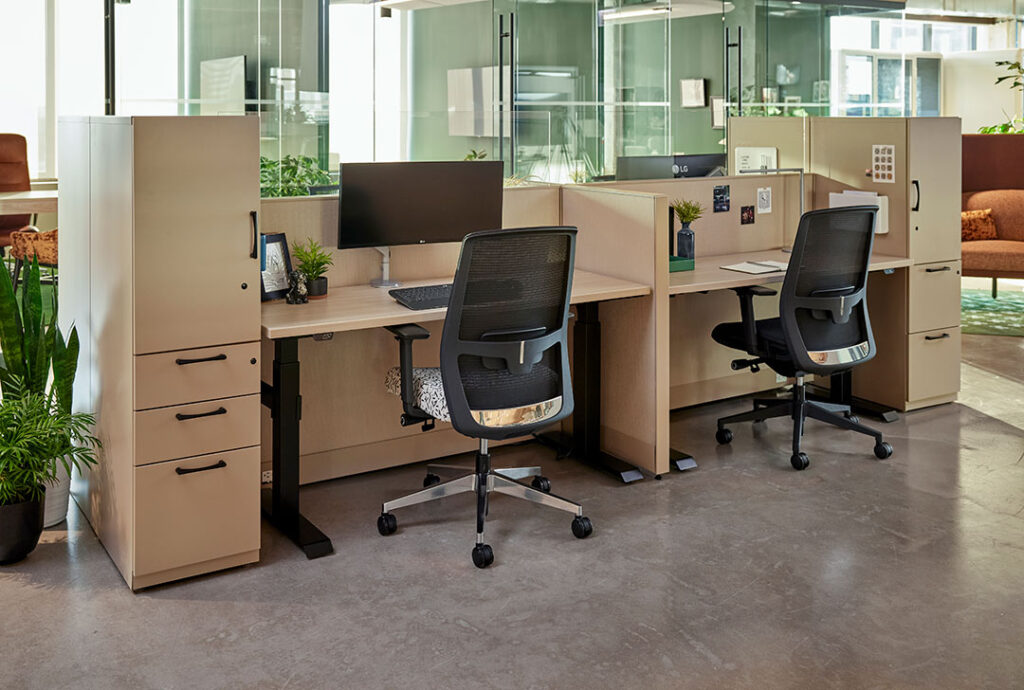
Office adjustable height workstations with ergonomic chairs

Your office furniture speaks volumes. Do you want to promote flexibility and autonomy? Offer open workstations with adjustable desks. Want to show you value employee well-being over bottom lines? Invest in ergonomic chairs. Looking to inspire innovation and cross-departmental interaction? Create collaborative lounges with modular seating.  

Conversely, if you want to send a message that shouts control, silos, and outdated thinking (none of which typically impress or motivate employees), stick with rigid cubicles and hierarchical layouts. 

Consider this: if your mission statement champions innovation, but your office is filled with isolated workstations and closed-door offices, you’ve created a cultural contradiction. Employees recognize these inconsistencies instantly, and the disconnect erodes trust. When your physical environment aligns with your stated values, you create an authentic culture where people can genuinely embody the behaviors you’re trying to cultivate. 

From Cost Center to Culture Catalyst 

Office workstations with ergonomic chairs

Too many organizations approach office furniture as a necessary expense—something to minimize rather than optimize. This procurement mentality misses the strategic opportunity entirely. The right furniture investment pays dividends in recruitment, retention, productivity, and employee satisfaction. Studies consistently show that the workplace environment directly impacts engagement levels, and engaged employees are measurably more productive, creative, and loyal. 

When you shift your perspective from procurement to strategic investment, the questions change entirely. Consider the following shifts and see how they change the way you see your office space and the people in it, and how both affect the results you want to achieve: 

  • Replace “What’s the cheapest option?” with “What environment will help our team do their best work?”  
  • Replace “How do we furnish 50 workstations?” with “How do we create spaces that foster the kind of collaboration and focus our culture requires?” 

While many vendors can deliver chairs and desks, your furniture procurement partner should approach every project as a cultural design opportunity. Our team doesn’t just understand furniture specifications. We understand how space shapes behavior, how layout influences communication patterns, and how thoughtful design can transform workplace culture. This is precisely where Gateway Furniture distinguishes itself. 

The Gateway Difference: Where Strategy Meets Execution 

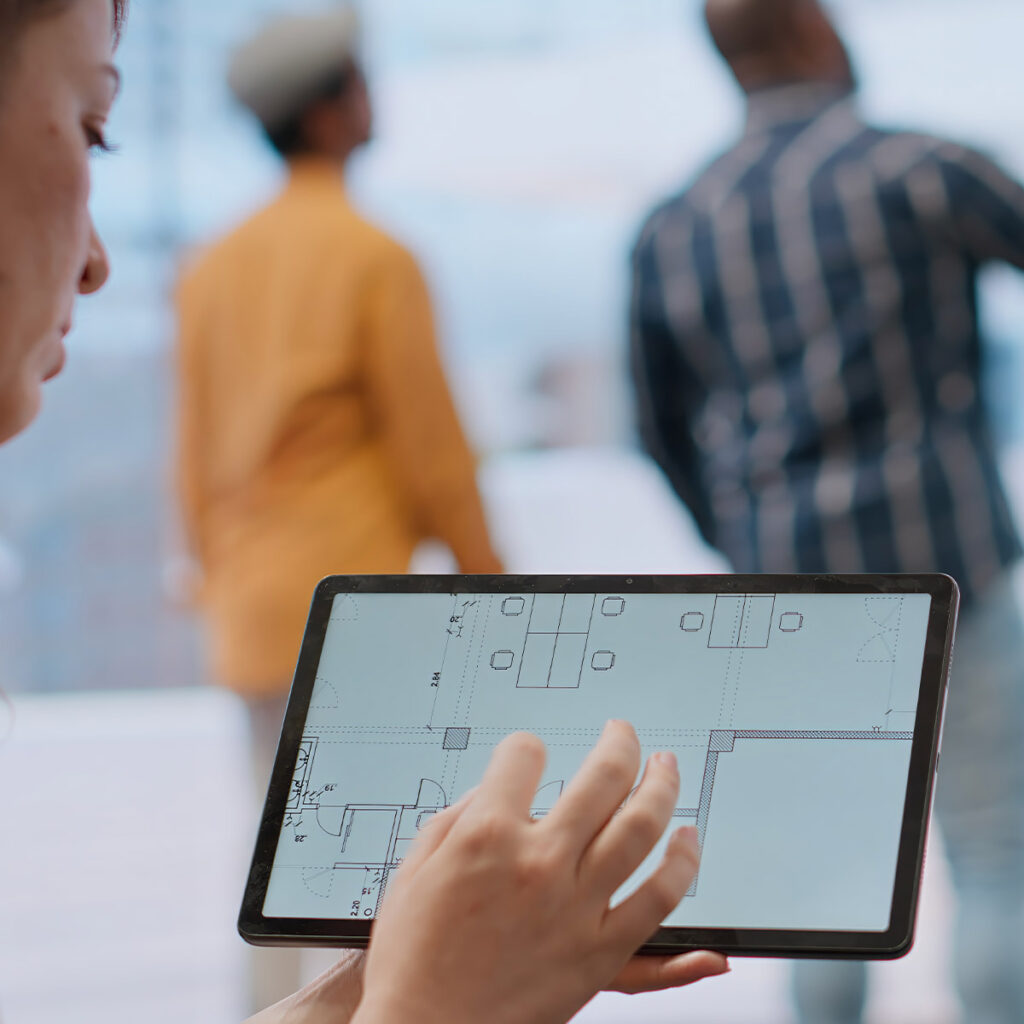
Office Design layout on a tablet device

As the premier workplace furniture and design company in South Texas, we understand the local landscape and cultures of our community, as well as its unique needs. Our process begins not with a catalog, but with conversation. We invest time understanding your company’s values, growth trajectory, and cultural aspirations. For example, are you scaling rapidly and need flexible configurations? We’ll design modular solutions that adapt as you grow. Transitioning to hybrid work? We’ll create spaces that maximize the value of in-office days. Building a culture of wellness? We’ll source ergonomic solutions that support physical health without compromising aesthetics. 

What sets Gateway apart is our dual excellence. Our team of office design experts navigate strategic considerations while executing the practical elements with the precision of procurement professionals. We handle everything from space planning and budget optimization to logistics and installation, ensuring that your cultural vision becomes physical reality without the typical headaches of furniture projects. 

Our relationships with leading manufacturers mean access to cutting-edge solutions at competitive pricing. Our project management expertise ensures on-time, on-budget delivery. But most importantly, our knowledge of the local Texas landscape and cultural perspectives ensure that every piece serves a purpose beyond function—each element contributes to the environment where your team will spend a third of their lives. 

Making the Strategic Shift 

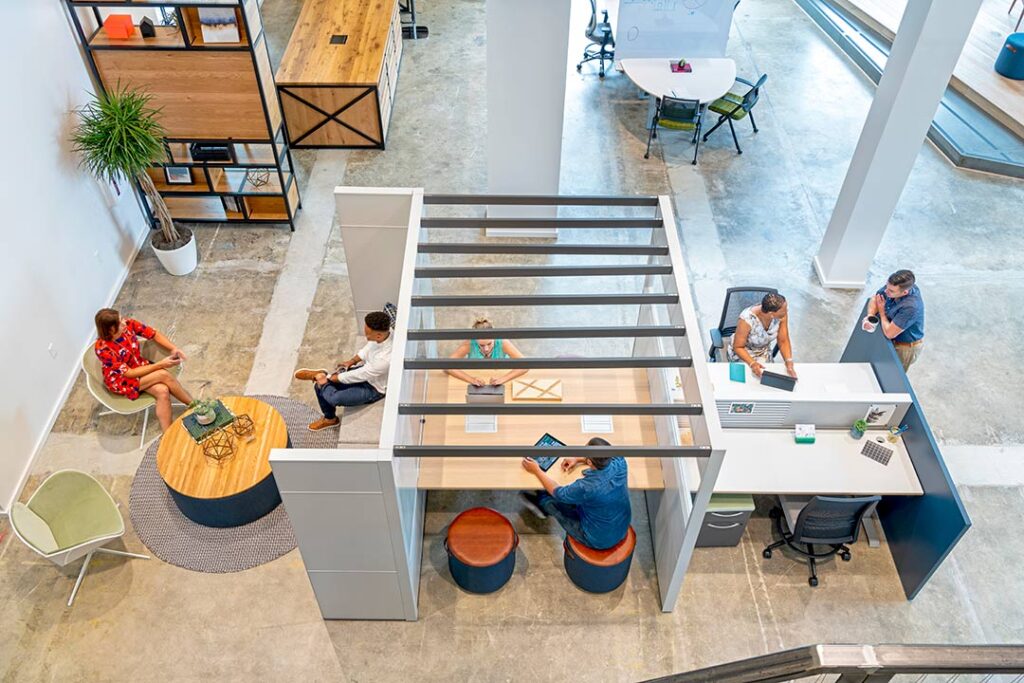
Aerial view of office solutions and employees

The most successful companies recognize that culture isn’t built through mission statements and team-building exercises alone. It’s constructed through consistent, tangible decisions, and that includes how you design and furnish your workspace. Your office furniture is one of the few investments that every employee interacts with daily. Make it count. 

Gateway Office Furniture understands that you’re not just buying desks and chairs—you’re building the physical foundation of your company’s culture. Whether you’re furnishing a startup’s first office or re-imagining space for an established enterprise, we’ll bring both the strategic insight and operational excellence to transform your vision into reality. Because in the end, great company culture doesn’t just happen. It’s designed, invested in, and built—one strategic decision at a time. 

Ready to transform your space to create a place employees thrive in and enjoy?