
In high-stakes environments, every second counts. Due to this, the physical workspaces in these types of environments are far more than background scenery. Whether they’re used in utility management, healthcare, or security sectors, control rooms, operations centers, and mission-critical hubs demand a level of design precision that ordinary office furniture simply cannot deliver. From the moment an operator sits down, to the moment they hand off their shift, their workstation must work as hard as they do. As a result, optimizing these spaces with the proper control room furniture is a foundational element of maintaining smooth operations.
Here are some tips on how to outfit your control room for optimal performance, comfort, and efficiency.
The Unique Demands of 24/7 Operations Environments
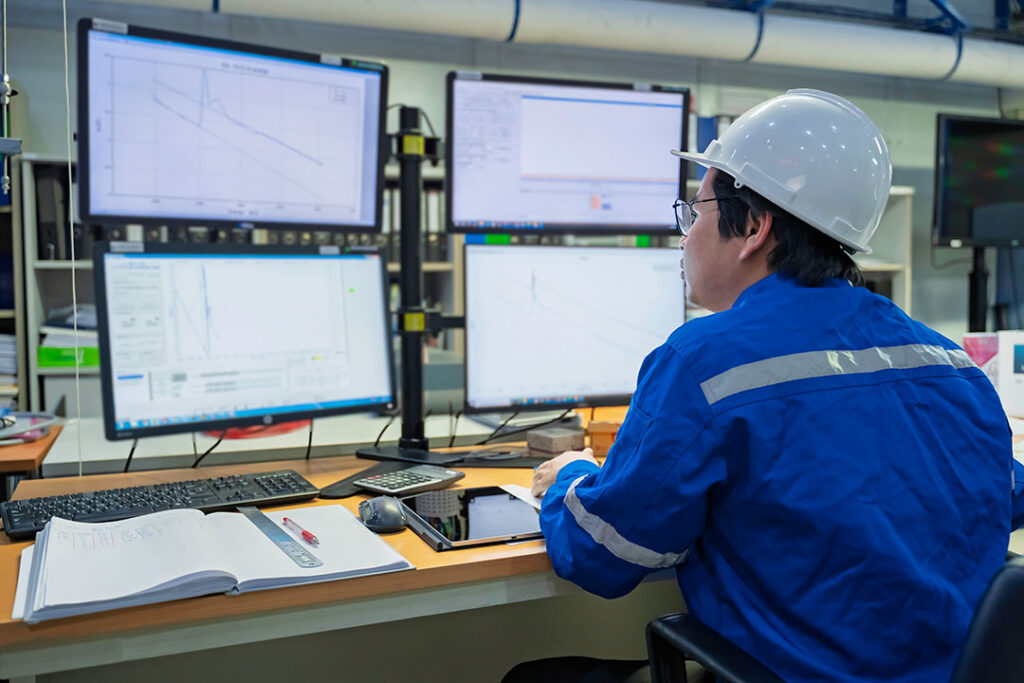
Unlike conventional offices, control rooms run continuously—during the day, throughout the night, and during weekends and holidays. Operators rotate through long shifts, often lasting eight to twelve hours, and will be monitoring multiple data feeds, coordinating responses, and making time-sensitive decisions during those periods.
In a utility network operations center, a lapse in visibility could mean a delayed response to a power grid failure. In a hospital command center, poor ergonomics can contribute to operator fatigue that puts patients at risk. In a security operations center (SOC), cluttered sight lines can mean a missed alert.
These environments share a common need: the need for furniture and console systems that are purpose-built to support sustained human performance under pressure. Standard desks and chairs, no matter how well-crafted they may be, are not designed to meet this challenge.
Ergonomics: The First Line of Defense Against Operator Fatigue
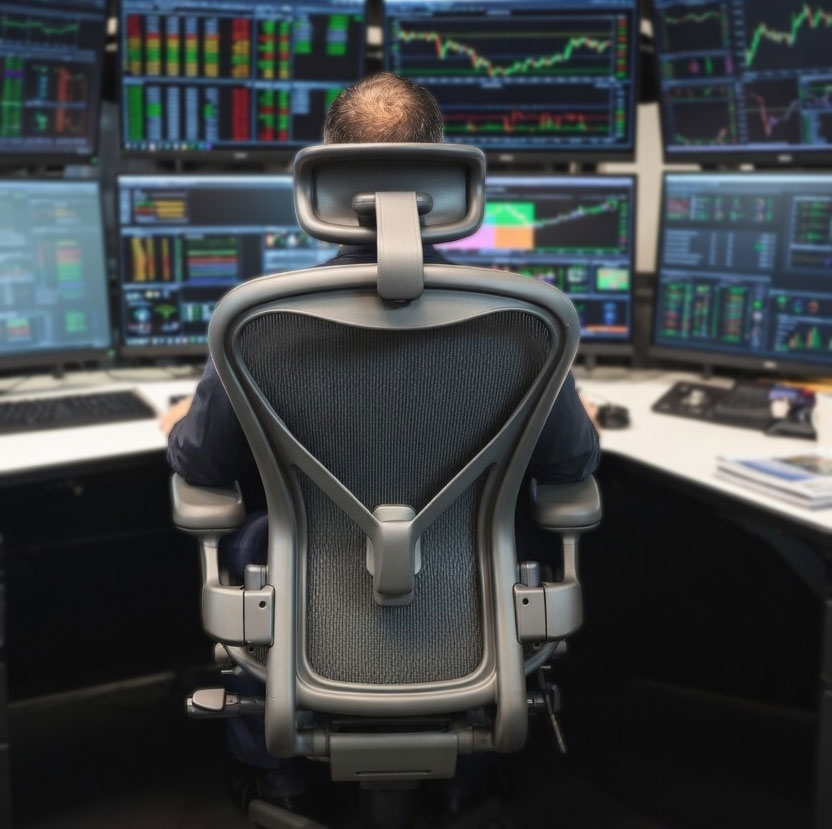
Ergonomic standards in a control room setting involve more than just lumbar support. In this type of workspace, ergonomics encompasses every point of physical interaction between the operator and their environment. Height-adjustable consoles allow operators to alternate between seated and standing positions throughout a shift, reducing the musculoskeletal strain that accumulates during long shifts. Monitor arms with full articulation enable each operator to customize their display angles instantly, preventing neck and eye strain without disrupting workflow.
Seating in these environments must be equally specialized. Task chairs designed for extended occupancy provide multi-point adjustability, breathable materials, and weight distribution, all of which are factors that help keep operators alert during their shifts. When operators feel physically supported, it’s easier for them to retain cognitive sharpness, which is crucial for any organization’s operational output and safety record.
Seamless Sightlines: Designing for Total Situational Awareness
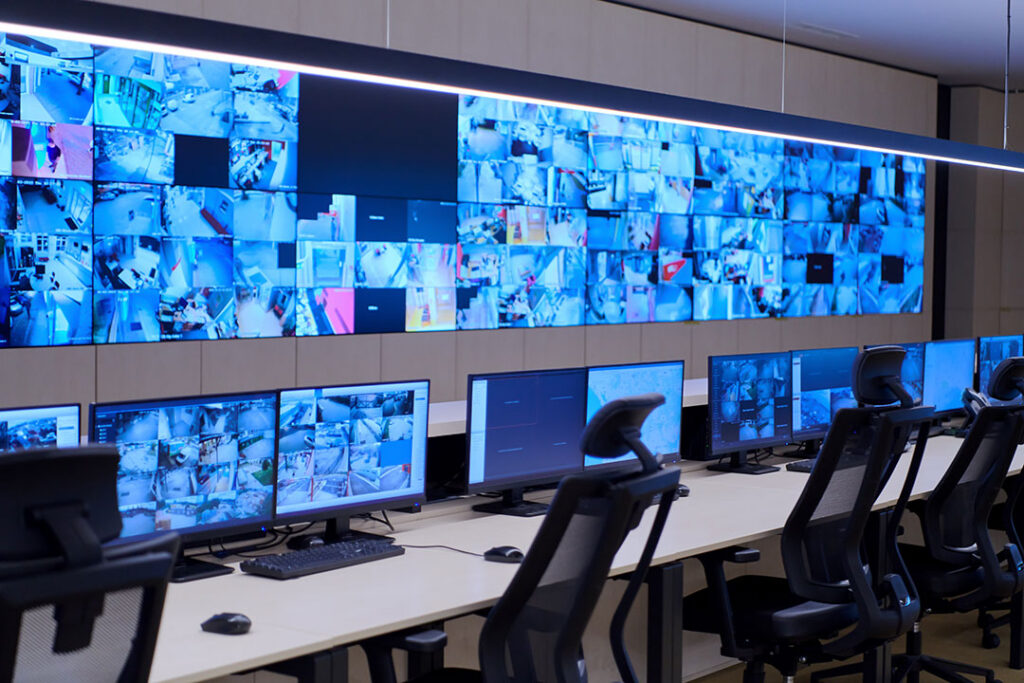
A control room’s effectiveness depends heavily on how well its layout facilitates situational awareness. Every console, workstation, and display wall must be positioned so that operators have unobstructed views of both their personal monitors and the shared video wall or overview display that is broadcasting system-wide data.
Tiered console arrangements are also a proven solution for control rooms, as they maximize sightlines for the entire team. These arrangements are typically comprised of workstations that are elevated progressively from the front of the room to the back. This creates spatial clarity that translates directly into faster, more accurate responses from operators.
In addition, low-profile console designs ensure that no single workstation blocks a colleague’s view, while ensuring the overall room layout is engineered to eliminate visual dead zones. In security hubs monitoring dozens of camera feeds, or utility centers tracking real-time infrastructure dashboards, you cannot afford any blind spots.
Integrated Technology: Furniture That Works with Your Systems

Modern control room consoles are part of an active infrastructure and are not passive surfaces. To accommodate that, the best solutions for utility, healthcare, and security environments incorporate the following items into the workspace:
- Built-in cable management channels
- Modular power distribution units
- Pre-cut pathways for video and data cabling
This not only keeps the workspace clean and safe but also simplifies technology upgrades as systems evolve.
Integrated KVM (keyboard, video, mouse) switching systems allow a single operator to control multiple computing environments without visual clutter. Console designs can accommodate multiple monitor configurations—from dual-screen setups to six-screen command consoles—while maintaining a clean, unobstructed work surface.
Lighting integration is another consideration for console rooms. By building bias lighting and task lighting into the console structure, you can reduce eye fatigue for operators who work in rooms that need to be kept dim to enhance video wall visibility.
Sector-Specific Considerations: Utility, Healthcare, and Security
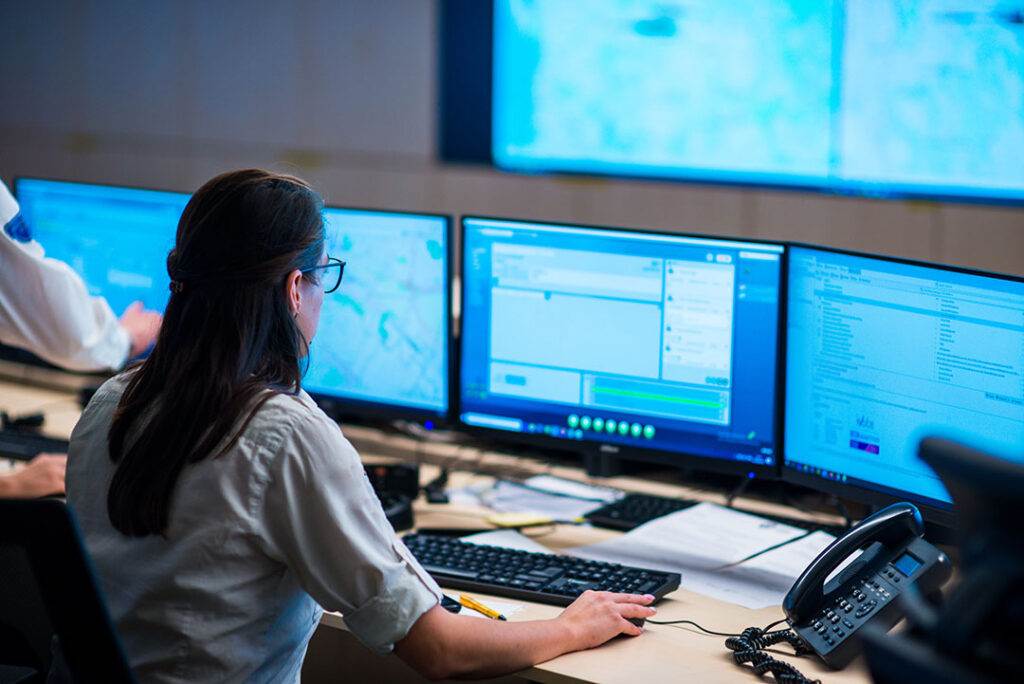
While the principles of ergonomics, sightlines, and technology integration apply broadly, every individual sector brings its own nuances. Utility operations centers often require larger-format console footprints to support SCADA system terminals alongside communications equipment.
Healthcare command centers benefit from modular configurations that can be rapidly reconfigured as care coordination needs shift. They also often require infection-resistant surface materials.
Security centers typically prioritize acoustic considerations, since voice communication is central to that kind of work. Therefore, console panels and room geometry must reduce noise transmission between workstations without sacrificing openness.
Partner With Gateway
Designing a high-performance control room is a complex, multi-variable challenge. The stakes—operational reliability, staff well-being, and long-term return on investment—are simply too high for a one-size-fits-all approach. That’s why working with a professional office furniture and design company like Gateway is vital.
We’ve been working with a variety of industries in south Texas for decades, including corporate, education, healthcare and government agencies. We thoroughly understand mission-critical environments and industries.
Our interior design experts conduct a thorough needs assessment and translate your operational workflows into a spatial and furniture strategy that is tailored to your specific responsibilities. We’ll source and specify consoles, seating, and technology integration components from manufacturers who understand 24/7 demands. Plus, we coordinate installation with minimal disruption to live operations and provide long-term support as your needs evolve.
We understand space planning, ADA compliance and safety standards, and chow lighting, acoustics, and workflow intersect. With us, you get an optimized operational environment that actively supports your team’s performance, reduces absenteeism from physical strain, and positions your organization to respond with speed and confidence around the clock.
Ready to optimize your command center?